A few years ago, 10 kW per rack was considered high density, but that is far from true today.
Current GPU clusters deploy at over 120 kW per rack. The next generation is expected to push 600 kW or higher. In short, that means that the facilities built for yesterday’s compute capacities can’t support today’s, and that problem is only going to get exponentially worse.
This post breaks down what high-density means today and beyond. We’ll cover how to measure it, what the power chain behind it looks like, and how to build an AI data center facility that delivers.
What is a high-density rack data center, and why does it matter?
Your data center rack is a physical cabinet that houses servers, networking gear, and other computing equipment, and rack density measures how much power it draws. This is the defining metric for whether a facility can support modern AI workloads.
Rack density is the amount of power, measured in kilowatts, that a single rack draws under load. The higher the density, the more compute you can fit into a given space, and the harder all the power systems around that rack have to work to keep it running.
Today, rack density ranges can be broken down into four main categories:
- Low-to-medium density: 5–10 kW per rack. Standard for traditional enterprise and commercial data centers.
- High density: 20–30 kW per rack. This range used to be the upper threshold.
- Modern AI GPU clusters: 100–165 kW per rack. This is what NVIDIA's GB300 generation requires.
- Next generation: Rubin-generation racks are expected to demand 400–600 kW per rack.
Rack density is absolutely critical, but you can’t ignore the other metric that matters when planning data center capacity: power density.
Power density is measured in watts per square foot, and it determines whether your building envelope can handle the required load. Both of these power capacity planning metrics impact critical downstream decisions such as cooling system design, transformer sizing, switchboard capacity, and the number of redundant systems you need to keep everything online.
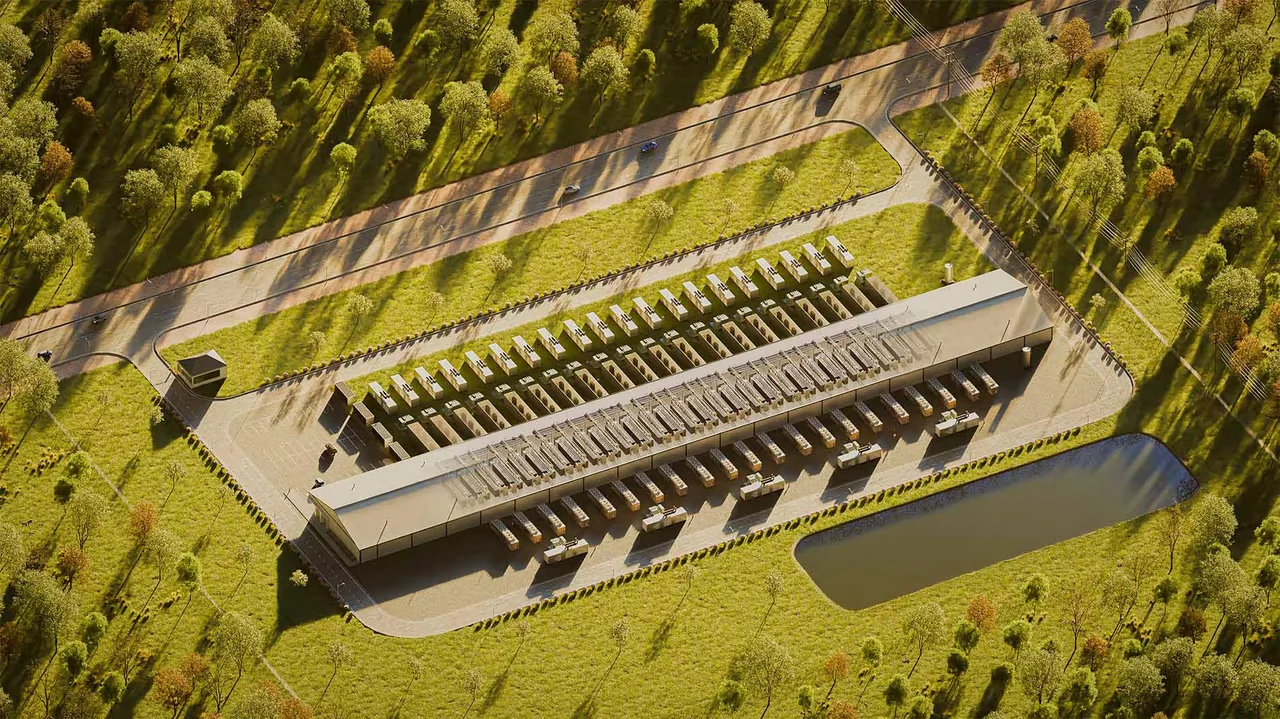
Power availability and time to energization are two of the primary constraints on AI compute expansion. Facilities that can deliver high-density capacity fast are the ones that will win the current compute race. The sections below break down exactly what it takes to build and run a high-density rack data center that delivers on all the necessary specs.
Read more: How Giga builds AI-ready data centers in 9 months
The power chain behind high-density racks
Power travels through several stages before it reaches the GPU. Here’s the step-by-step flow of the key stages in your power chain:
- Utility feeds power at medium voltage to the site.
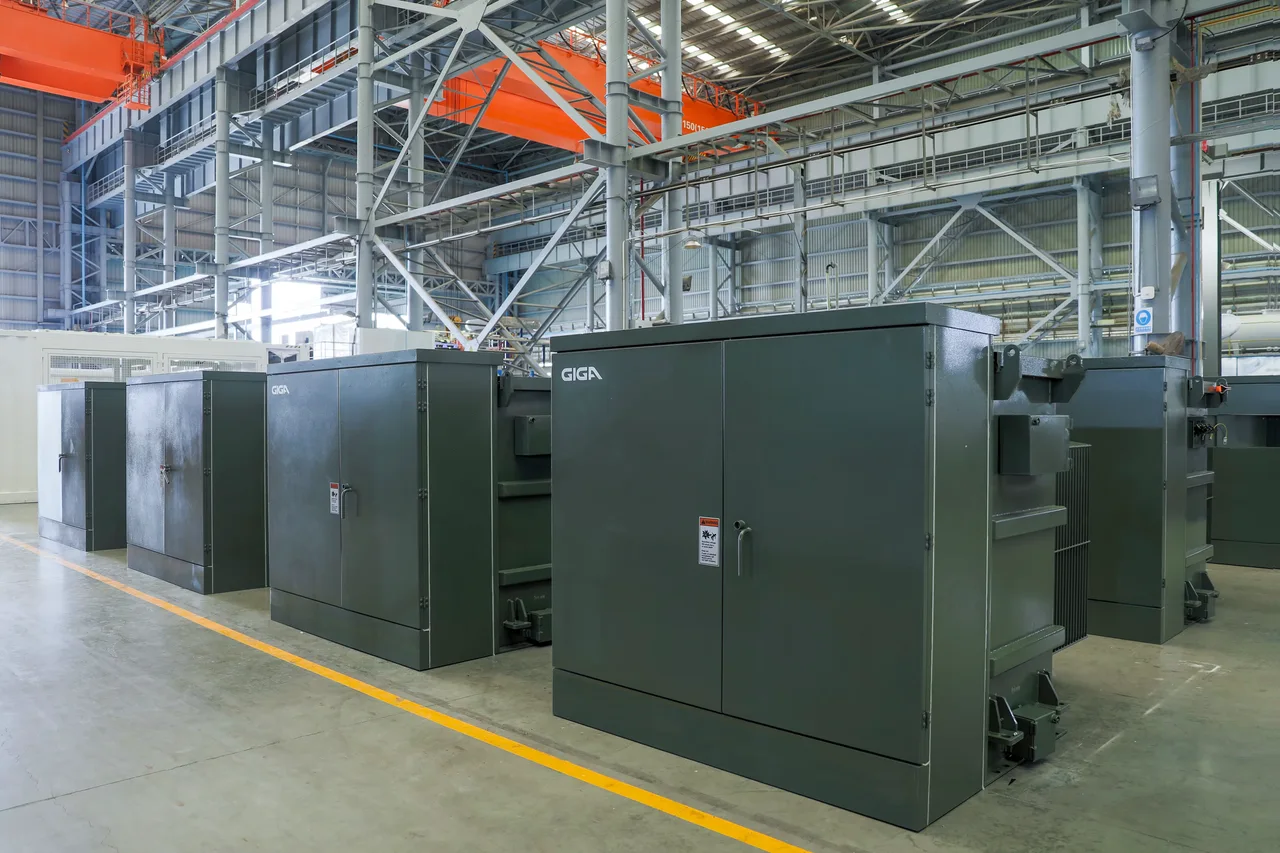
- Substation and three-phase padmount transformers step power down to a usable voltage.
- A UL891 switchboard distributes power at the low-voltage level across the site.
- PDUs (power distribution units) condition and route power to individual racks.
When specifying equipment for your power chain, be sure to spec the right voltage for your build. High-density AI racks generally run on 415V rather than the 208/120V legacy configurations still common in older facilities. If you're evaluating a facility, confirm the voltage architecture matches your hardware before you commit.
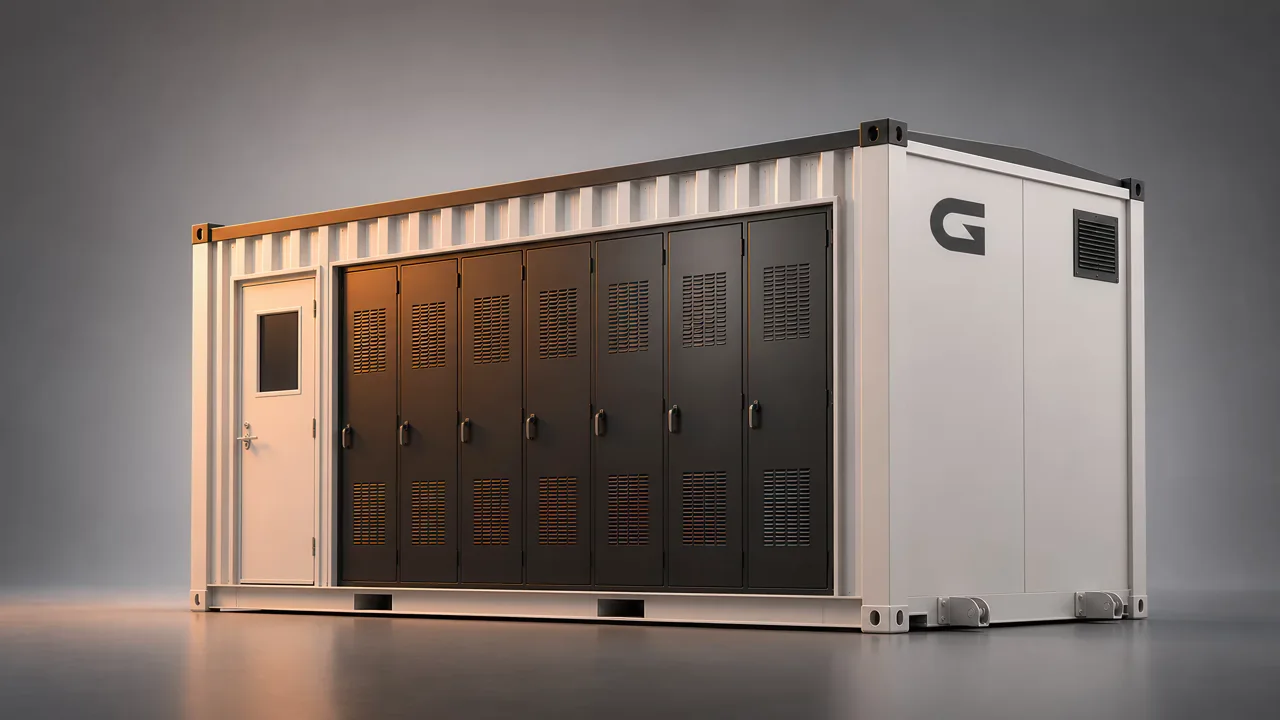
At Giga, we manufacture the transformer, the switchboard, and the e-house that houses the UPS and battery systems. We offer full-service prefabricated AI data center builds that are fully tested and validated in our factories before arriving at your site, plug-and-play. When one partner owns the full power chain you have fewer handoffs, fewer delays, and one number to call if something goes wrong.
Read more: What it means to be vertically integrated in AI data center construction
The importance of liquid cooling for high-density compute
High-density racks require a fundamentally different cooling strategy. There's no single threshold where one approach gives way to another; it's a progression. As a rule of thumb:
- Perimeter cooling (CRACs/CRAHs) handles racks up to around 15 kW
- In-row cooling takes over in the 15–35 kW range
- Rear door heat exchangers (passive and active) extend that to roughly 20–50 kW
- Liquid cooling (direct-to-chip (DTC) or immersion) is the only viable path at 50 kW and above
At 165 kW per rack, the current standard for Nvidia GB300 GPU deployments, direct-to-chip liquid cooling is the only approach that works.
Here's how the cooling infrastructure is set up in a properly designed high-density facility:
- CDUs (cooling distribution units) sit in-row and route temperature-controlled liquid directly to each rack and chip.
- Liquid Distribution Loop routes the supply and return piping from the CDU to the rack below the overhead power and network distribution systems.
- Leak detection is built in as a secondary safeguard.
High-density vs standard distribution
A high-density AI data center has an entirely different infrastructure from a standard facility. They have different rack capacity needs, but AI data centers also require different backup power architectures, greater redundancy, and higher efficiency in incoming power. Let’s take a look at each in detail.
Backup power
AI data centers require uptimes north of 99%, so when utility power is interrupted, you need your backup power ready to kick on immediately. You can’t risk an outage while you wait for your generators to boot up, so you’ll need a two-part system as a stopgap:
- UPS (uninterruptible power supply) + battery: This device kicks in and provides 5–7 minutes of runtime while generators start up.
- ATS/STS (automatic transfer switch/static transfer switch): This switch continuously monitors incoming power and automatically transfers between grid, battery, and generator.
Generators take over from there and carry the full site load. Most generators can carry your site’s load for up to 48 hours without refueling.
Redundancy tiers
Reliability tiers define how much redundancy is built into a facility, and the distinctions matter more than most people realize:
- Tier I — Basic capacity: No redundancy. A single path for power and cooling means any failure or maintenance event risks downtime.
- Tier II — Redundant capacity: Backup components exist, but the facility is not concurrently maintainable. You have some protection against failure, but planned maintenance can still result in downtime.
- Tier III — Concurrently maintainable: Enough redundancy to perform maintenance on any component or system without affecting IT capacity.
- Tier IV — Fault-tolerant: Every component and system is fully redundant with independent distribution pathways for both power and cooling. Any failure, planned or unplanned, leaves IT capacity untouched.
Tier III is the standard for AI data center deployments. Tier IV is the right call for the most mission-critical applications, but for most operators, the cost premium doesn't justify the marginal reliability gain over a well-designed Tier III facility.
Gross power vs. critical IT power
Not all incoming power reaches the racks. Every time power moves from one stage of the power chain to another, you run the risk of power loss through conversion.
At 165 kW per rack, inefficiency can compound quickly. Your power usage effectiveness (PUE) rating allows you to track conversion losses and optimize your power chain. A PUE of 1.0 is theoretical perfection; everything above that represents overhead.
Two variables drive where your site lands:
- Cooling approach: Adiabatic (evaporative) cooling systems can achieve peak PUE targets of 1.1 or below. Compressorized systems like air-cooled chillers push that peak number to around 1.4. (The trade-off is water: those ultra-low PUE hyperscaler deployments have a significantly higher water-use efficiency (WUE).)
- Liquid vs. air cooling mix: A fully liquid-cooled facility will perform very differently from a hybrid or fully air-cooled one.
What most people get wrong is treating PUE as a single number. It’s important to consider both your PUE ceiling and your data center’s annualized performance.
When evaluating a data center construction company, ask for both the gross power capacity and critical IT power at the stated PUE to get a full picture of the power capacity you can actually expect.
Choosing the right high-density rack data center partner
Operating a high-density rack data center requires strict infrastructure requirements. Your rack density number means nothing if the power chain, cooling system, and redundancy architecture behind it aren't sized and integrated to match. If you’re working with the wrong infrastructure partner, you’ll struggle to spec the right equipment and get your site energized on time.
The speed problem is just as real as the technical one. If you have GPUs ready to deploy and you’re struggling to find rack-ready capacity that can come online quickly, you need to work with a partner who owns enough of the stack to actually control the timeline.
If you're scoping a high-density deployment and working through where your power chain starts and your rack density targets end, that's exactly what our team does every day.
Download Giga's Data Center Power Chain resource to see how the full infrastructure stack fits together, or get in touch to talk through your site requirements directly.