Demand for AI-ready data centers is accelerating faster than the infrastructure industry was built to support. Hyperscalers are racing to bring capacity online, and they’re facing the same bottleneck: getting adequate, reliable power to the rack.
Data center power capacity planning is the process of ensuring a facility's electrical infrastructure can meet your current and future compute demand without over- or under-provisioning. If you get it wrong, you’re either overspending on infrastructure you don’t need or under-speccing and setting yourself up for potential downtime in the future.
This post breaks down the core elements of data center power capacity planning. We’ll share all the steps of the planning process and what operators, contractors, and developers should keep front of mind at every stage.
What data center power capacity planning involves
Data center power capacity is all about delivering the right amount of power to the right places at the right time. The first thing you need to get right is your facility’s load, so you need to understand the difference between IT load and gross facility load.
- IT load: The compute power that actually reaches your servers and GPUs.
- Gross load: The power from cooling infrastructure, lighting, power distribution losses, and support systems in addition to the power reaching your servers and GPUs.
The gap between those two numbers is significant. On a 40 MW site, you might deliver 28 MW or less to the actual compute. You need to plan around the gross load of your facility if you want to plan your power capacity accurately.
Power also doesn't operate in isolation. Capacity planning spans power, cooling methods, space, and network connectivity. Those disciplines are interdependent, but power is the constraint that caps everything else. You can't cool what you can't power, and you can't run denser racks than your distribution infrastructure supports.
You need to assess your capacity at the rack, row, and room levels. Each level has its own power density limits and distribution requirements, so keep that in mind throughout your planning process.
Finally, remember that data center power capacity planning is not a one-time exercise. Utilization fluctuates daily, weekly, and seasonally. AI workloads, in particular, are pushing rack-level power density higher and faster than traditional planning models were built to handle. A plan that was accurate at build time can be obsolete within a year.
Read more: Data center construction guide: Costs, timelines, and equipment
Sizing power from the rack up
Before you can size a transformer or spec a switchboard, you need to know how much power each rack actually demands.
The calculation involves three variables:
- Per-device power draw in kilowatts
- Cooling load in BTUs per hour
- Available rack units
These three numbers are the foundation of your planning chain, so it’s critical that you get them right. One tip here is to avoid planning off of the nameplate ratings alone. Nameplate reflects the maximum amount a device could ever pull. In practice, your actual consumption will likely run somewhere between 20% to 85% of that number, depending on workload.
The right approach is direct measurement with intelligent PDUs or branch-circuit monitors. This accuracy matters even more as GPU-heavy deployments push rack densities higher. A rack that used to draw 10 kW might need 30–50 kW to support modern AI compute.
Designing the power chain for redundancy and growth
Next, you’ll want to build redundancy and growth potential into your power chain. Each link in your power chain needs to be engineered to work for today’s load and support where you’re going.
Most data centers need N+1 redundancy throughout their infrastructure, which means dual UPS feeds, redundant bus bars, and backup cooling in addition to speccing one more transformer than you need to handle your current load.
Next, plan for growth. If you under-size any component for the capacity you’ll need in the future, you’re creating a bottleneck that limits your entire facility. Retrofitting capacity after your site is live is expensive and disruptive, so you’d be better off planning for growth from day one.
Why lead times on power equipment matter more than ever
A capacity plan is only as good as your ability to execute it. And right now, procurement is one of the biggest execution risks in data center development.
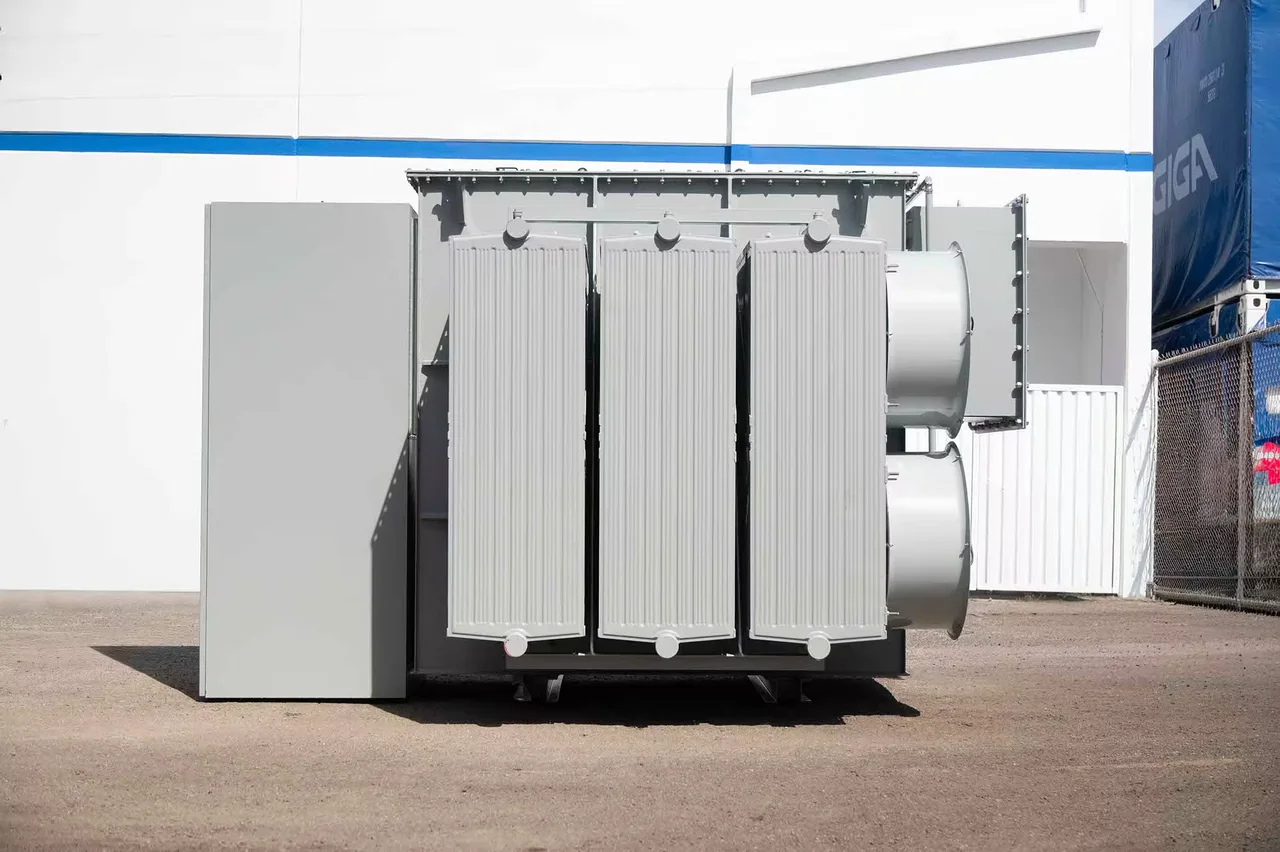
Transformer lead times from a traditional OEM can run 26 weeks or longer, and switchboard lead times aren’t too far behind. When you’re racing to get AI compute online, that’s a big chunk of the calendar spent sitting around waiting.
At Giga, we control our own production and own our entire supply chain, allowing us to move way faster than legacy OEMs. Because of our full supply chain control and American factories, we can stand up new data centers from bare ground to energization in 9 months.
Equipment procurement is not a decision you want to wait to make until your capacity plan is locked in. The best operators today have learned to run their equipment pipeline in parallel with their capacity modeling. By the time your design is finalized, your purchase orders for long-lead equipment like substation and padmount transformers should already be in motion.
One of the biggest factors that impacts your capacity planning and data center construction timeline is manufacturer selection. Instead of working with half a dozen different vendors on different timelines, your best bet is to work with a vertically integrated manufacturer.
Get in touch with our data center sites team to learn more.
Using DCIM and real-time monitoring to stay ahead
As we mentioned earlier, capacity planning isn’t a one-and-done process.
Once your facility is live, you need to maintain capacity headroom, which requires continuous visibility into what’s happening across power, cooling, space, and network infrastructure. DCIM software is the standard tool for giving operators data to identify circuits approaching capacity, cooling efficiency drifting, or fans running outside normal parameters.
The core efficiency metric to track is PUE, or power usage effectiveness. This metric measures total facility power divided by IT equipment power. A well-managed air-cooled site targets a PUE between 1.3 and 1.6, and 1.3 or below for liquid-cooled deployments.
Monitoring data is a key input that helps you determine your future capacity. Utilization trends tell you when you'll need additional infrastructure, and staying ahead of that demand curve is critical if you want to keep your site running efficiently.
Getting data center power capacity planning right from the start
Data center power capacity planning is critical foundational work for any data center construction project. Following the insights from this post, you should be able to avoid the biggest risks of capacity planning and right-size your critical infrastructure.
Operators and contractors who need the right power equipment on the right timelines need to work with a vertically integrated manufacturing partner like Giga. When you have one partner from design to energization, you can eliminate schedule risks and bottlenecks, speeding up your time to power.
Whether you're planning a new build or expanding existing capacity, Giga's team can help you spec and source transformers and switchboards on timelines that match your project. Build a quote or contact the Giga team to get started.