.avif?w=1280)
AI workloads and cloud expansion have created a massive spike in data center demand. Hyperscalers, colocation providers, and other businesses are racing to bring new capacity online. But can traditional procurement and construction processes keep up?
If you’re worried about long lead times on equipment and projects that drag over multiple years, you need this data center construction guide.
We'll cover what data center development costs, how long it takes, and which equipment you need for your build. You'll get real numbers, realistic timelines, and procurement strategies that account for modern supply chain challenges.
Understanding data center construction
A data center is a facility designed to keep servers, storage systems, and network equipment up and running without downtime. Depending on your business case, you’ll have different specific needs from your data center.
- Hyperscale facilities power cloud platforms and AI systems for companies like AWS, Microsoft, and Google. These projects often span multiple buildings and require 20 to 100+ megawatts of capacity.
- Colocation data centers lease rack space to multiple tenants who share core infrastructure. They're built for flexibility, with isolated white space and strict uptime requirements.
- Enterprise data centers serve a single organization with specific compliance, security, and capacity needs. Banks, healthcare networks, and government agencies typically build these to maintain control over sensitive data.
Four critical infrastructure systems in data centers
A data center’s core infrastructure consists of four critical systems. First, you have your power distribution. This system starts at utility feeds and steps down through transformers and switchgear before reaching rack-level PDUs.
Next, your data center needs proper cooling infrastructure. High-density server loads generate massive heat that needs a combination of air cooling and liquid cooling to manage. Closed-loop, direct-to-chip liquid cooling systems have become standard as AI workloads push power density higher.
Third, you need high-speed fiber connectivity to link your facility to the broader internet infrastructure. Data centers are worthless without reliable, low-latency network access. Work with your site developer early to identify fiber routes, coordinate with carriers, and plan conduit pathways before you pour concrete.
Finally, your facility needs fire protection and physical security systems, though these typically come later in the build sequence. Fire suppression should be designed for electronics, not standard sprinklers that destroy servers. Physical security includes perimeter fencing, surveillance, and access control to prevent unauthorized entry.
How much does data center construction cost?
Data center construction varies, but can exceed $8 million to $12 million per megawatt of IT load. These numbers vary based on design complexity, redundancy requirements, and site conditions.
Where are those funds allocated? Here is a breakdown of what to budget:
The most important takeaway here is that your power distribution equipment should account for nearly half your budget. When you work with a manufacturer with full vertical integration, you can get competitive pricing on these key elements without sacrificing your timelines.
How long does data center construction take?
Done the traditional way, a data center project will take 18 to 30 months from concept to commissioning. Let’s take a look at how that typically breaks down step by step.
- Planning and feasibility: 3 to 6 months. This stage is where you assess site viability, power availability, and business case.
- Design and engineering: 6 to 12 months. Work with your vendors and suppliers to create blueprints and infrastructure layouts.
- Permits and approvals: 6 to 18 months. Zoning, environmental review, and utility coordination (often overlapping with design).
- Construction: 12 to 24 months. Civil works, MEP installation, and system integration
- Testing and commissioning: 3 to 6 months. This final step is where you’ll verify that every system meets performance and uptime requirements.
Add it up, and you're typically looking at two years minimum. For hyperscale projects or builds in established markets with tight permitting, three years isn't uncommon because traditional vendors struggle with equipment procurement for transformers, switchgear, and other long-lead items.
Add fragmented vendors, sequential handoffs, and reactive problem-solving to the mix, and you’re looking at further delays that can stretch projects even longer than three years.
Giga's approach is significantly faster.
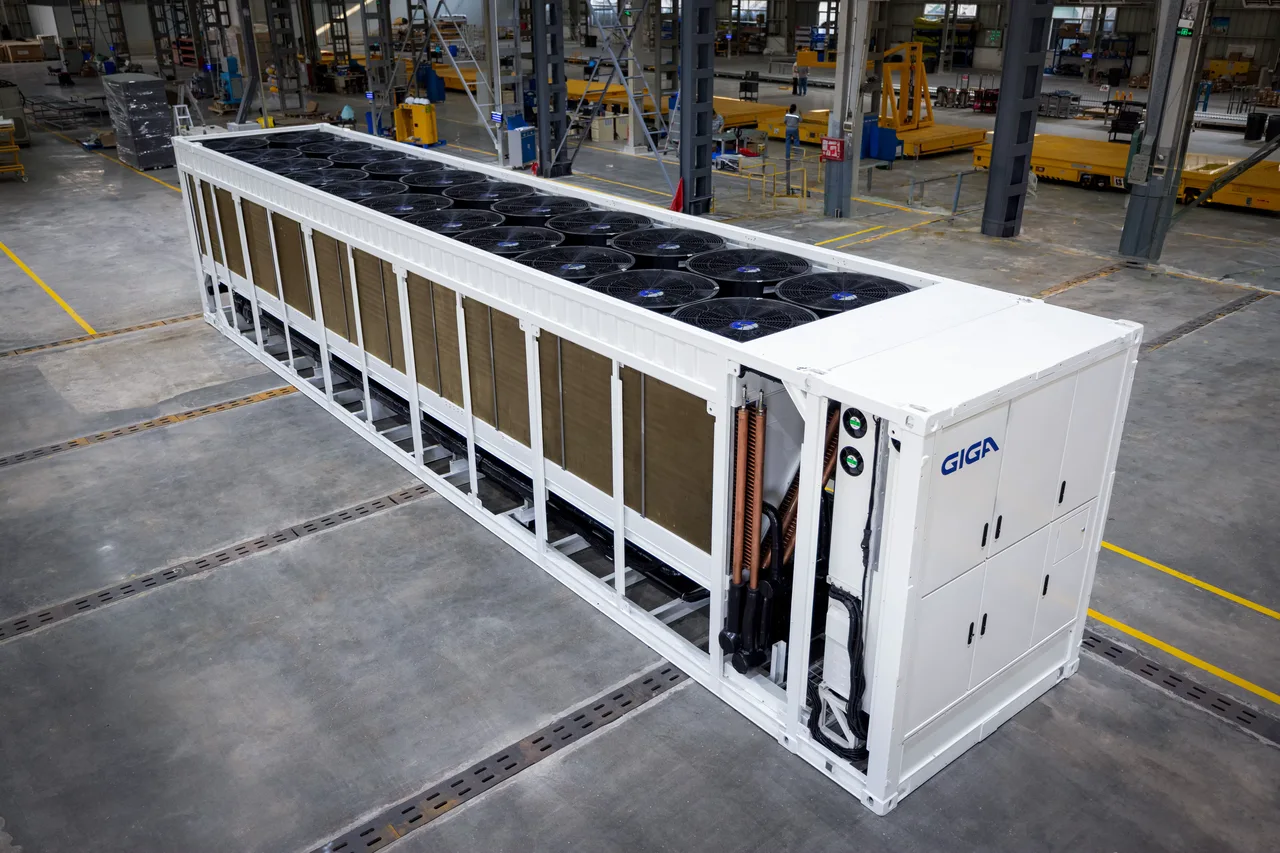
We develop, build, and operate energy infrastructure ourselves. For AI data center sites, we manufacture critical power equipment in-house, using prefabricated systems tested in our factory to decrease commissioning timelines, and deploy them with our own construction teams. That eliminates vendor coordination delays and keeps the entire process accountable to a single timeline.
The result is that we can energize sites in as little as 6 to 8 months from contract signature to ready for service.
Critical equipment for data center construction
Equipment is one of the most significant expenses of new data center construction, but what critical equipment do you need for your data center?
Long-lead equipment
Data center timelines live or die based on when critical power equipment shows up on site. Your primary power infrastructure includes:
- Medium and high-voltage transformers: Substation transformers handle the initial step-down from transmission lines, then padmount units distribute power across the site.
- Switchboards and switchgear: UL891-rated switchboards are the backbone of power distribution inside your facility, feeding all your equipment. Medium-voltage switchgear handles upstream distribution and isolation.
- UPS systems and battery backup: These uninterruptible power supplies bridge the gap between an outage and generator startup, protecting against lapses that could crash servers.
- Backup generators: Diesel or natural gas units provide long-term power during extended outages and are sized to carry the full facility load.
Cooling and thermal management systems
Power generates heat. High-density racks generate a lot of heat. You’ll also need to invest in cooling and thermal management systems for your data center:
- Traditional air cooling: CRAHs (Computer Room Air Handlers) and CRACs (Computer Room Air Conditioners) move cold air through the facility.
- Liquid cooling: When rack densities push past 30 kW, air cooling can struggle to keep up. Liquid cooling delivers better thermal performance in a smaller footprint and is quickly becoming the standard for high-density AI and GPU infrastructure.
- Chillers and cooling towers: These units sit outside or on the roof and are sized based on total heat load. They reject heat from the facility to the outside environment.
- Cooling Distribution Units (CDUs): These advanced units manage liquid cooling loops for direct-to-chip applications. As AI workloads drive rack densities to 100+ kW, CDUs are becoming critical infrastructure.
Power distribution and monitoring equipment
Once power enters the facility, you need a way to distribute it among your racks. Some key equipment and systems include:
- Power Distribution Units (PDUs): These units bridge the gap between switchboards and server racks. They handle the final transformation and distribution, often including built-in monitoring and remote management capabilities.
- Remote Power Panels (RPPs): Use RPPs to distribute power across large white space areas. This approach reduces the need for long cable runs and helps keep maintenance simpler.
- Metering and monitoring systems: Optimize PUE (Power Usage Effectiveness) and identify inefficiencies with systems that allow you to track power usage in real time.
- Maintenance bypass switchboards: Install bypass switchboards to allow UPS systems to be serviced without taking the facility offline. These are mission-critical for Tier III and Tier IV facilities that promise concurrent maintainability.
Common procurement challenges
Standard switchboard and transformer lead times can run long these days. Supply chains are strained, manufacturing capacity is maxed out, and many customers are competing for the same slots.
With historically long-lead items like transformers and generators at the center of your build, some legacy OEMs are quoting 100+ week lead times. Those timelines are particularly tough when you know you’re losing revenue and opportunities every month your data center build is delayed.
Giga's model removes a lot of that waiting.
We manufacture transformers and switchboards in our own facilities with industry-leading lead times. We control the supply chain, own the engineering resources, and build with a hands-on approach that keeps projects moving and prevents equipment from becoming a bottleneck for your build.
Risks and challenges in data center construction
Data center projects fail or get delayed for very predictable reasons. Here are some of the most common sticking points in data center construction and how to manage them.
- Supply chain delays on critical equipment. Transformers, switchboards, and generators have long lead times. If you order too late or choose the wrong supplier, your entire project stalls.
Solution: Lock in procurement early, ideally during the design phase, and work with a manufacturer like Giga with full control of their own supply chain. - Scope creep and late design changes. A shift in rack density or cooling strategy after equipment is ordered causes headaches, rework, and, you guessed it, more delays.
Solution: Freeze specs before procurement and run tight change control through delivery. - Compliance gaps. If you miss a permit or fail an inspection your construction process will have to halt and remain on hold for weeks or months.
Solution: Track every approval milestone and run periodic code reviews with local authorities throughout the project. - Weather disruptions during site work. Once the larger structure is built, weather is less of an issue, but rain, wind, and snow can delay foundation and structural phases.
Solution: Finish site grading as early as possible and build buffer days into your schedule to allow for inclement weather. - Budget overruns from rework or price escalation. Costs can spiral when supply prices jump mid-project or mistakes require fixes and rework
Solution: Track real-time costs against budget and add budget for some unforeseen issues from the start.
The projects that finish on time and on budget are the ones where someone owns the full process. When site development, manufacturing, and construction sit under one roof, accountability doesn't get lost between vendors. Giga Energy’s full vertical integration gives us the visibility and control necessary to keep things running smoothly throughout the construction process.
Speed up data center construction with the right infrastructure partner
Traditional procurement and construction models weren’t built for the speed modern data centers need. When you’re struggling with multiple vendors who all have long lead times, you’ll face bottlenecks and handoff issues that push timelines past two years and drive costs higher with every delay.
What you need is an infrastructure partner who owns the whole process. When manufacturing, engineering, and supply chain sit under one roof, projects move faster (standing up new data centers in as little as 6-8 months), and you have one call to make when it comes to accountability.
Giga is the hands-on energy infrastructure company built for the modern age. We manufacture transformers, switchboards, and complete power systems in-house with industry-leading lead times. We develop sites, build infrastructure, and operate in power markets within a single vertically integrated system.
Ready to accelerate your data center project? Contact Giga's team to discuss your infrastructure requirements and learn how we can support faster, more predictable timelines.