Data centers are getting bigger, denser, and more power-hungry. The infrastructure decisions that support them, therefore, are becoming more critical and less forgiving.
Much of the conversation around data center power focuses on equipment like transformers, switchboards, and generators, but we also need to include the power distribution unit (PDU) in the discussion. The PDU is a critical link in your data center power chain, and a misspecified one can undermine every other good decision you made in your data center design.
This post covers what a power distribution unit is, where it fits in the data center power chain, the different types and form factors, the specs that matter most, and how the PDU connects to the systems around it.
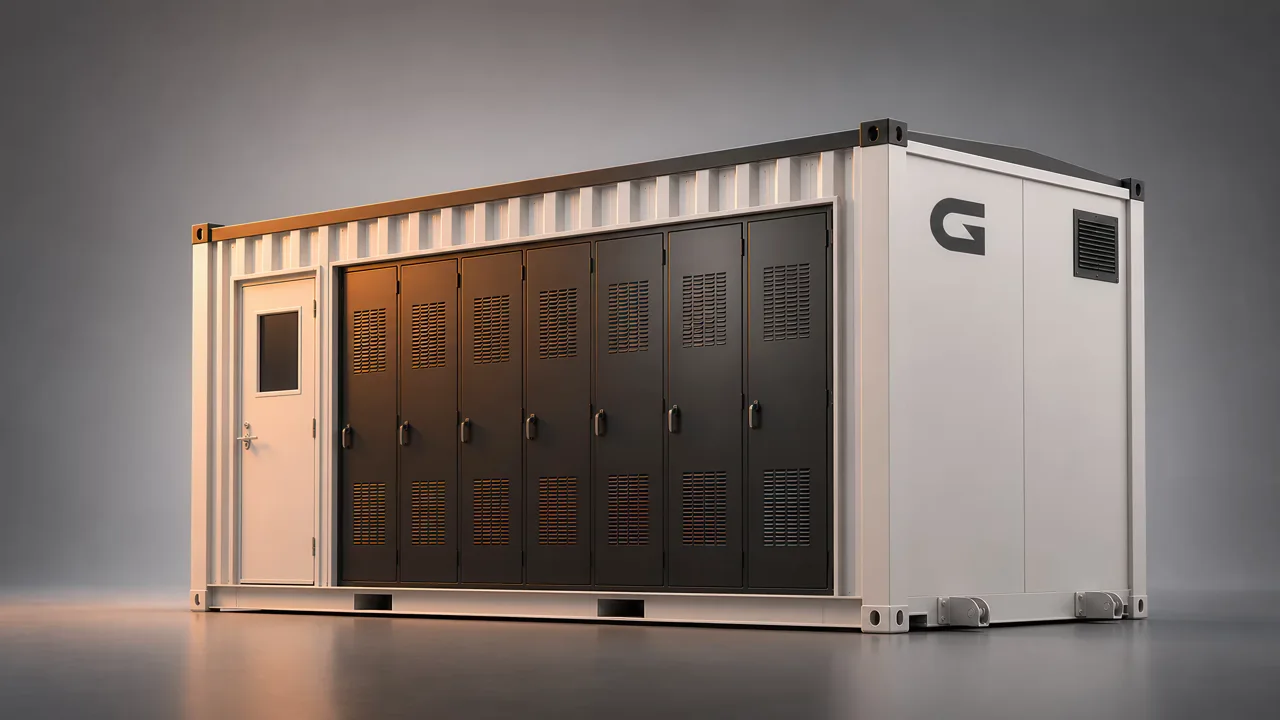
For more information on Giga’s pre-engineered data center system, the GigaBase, visit our GigaBase resources.
Power distribution unit definitions and basics
Before we go any further into this post, let’s discuss the term “PDU.” The term can refer to two completely different pieces of equipment, so let’s clarify both definitions and which one we’ll be discussing in this post:
- The rack PDU (rPDU) is the vertical power strip mounted inside a server rack. It's lightweight, plug-in, and feeds individual devices. Think of it like a smart power strip with up to 48 outlets.
- The floor-mounted PDU is a large, transformer-based unit, typically 500 to 2,250 kVA, that lives in your electrical room. It takes incoming 480V power and steps it down to either 415/240V or 480/277V, providing voltage conversion and isolation for everything downstream.
For the rest of this post, when we say PDU, we mean the floor-mounted, transformer-based unit. When we mean the rack-level strip, we'll say rPDU.
Where the floor-mounted PDU sits in your data center power chain
Where does your PDU sit in your data center power chain? The full power chain looks like this:
Utility → medium-voltage switchgear → transformer → UL 891 switchboard → floor-mounted PDU → RPP or busway → rPDU → server
The floor-mounted PDU sits in your electrical room upstream of everything at the rack level, and there are a few key differences between your PDU and the rest of your power chain.
Most equipment in the power chain moves or protects power. The floor-mounted PDU transforms power, stepping it down and providing galvanic isolation, which is a clean electrical break between the upstream supply and your downstream load.
That isolation makes multi-tenant and multi-circuit configurations possible and protects downstream equipment from any noise or faults that might originate upstream.
Most deployments need 500 to 750 kVA per floor-mounted PDU, but hyperscalers pushing high-density AI workloads are increasingly exploring configurations up to 2,250 kVA as rack densities climb. If you're designing for AI infrastructure today, spec for where density is going rather than where it is right now to avoid expensive retrofits later.
Voltage output: 415/240V vs. 480/277V
Your floor-mounted PDU's secondary voltage determines what rPDUs, server PSUs, and CDUs you can run downstream. For an AI deployment, you’ll be looking at either 415/240V or 480/277V.
- 415/240V: Most high-density servers in production today are specced for 415/240V three-phase. If you’re deploying GPU clusters now, your hardware is most likely built for this configuration.
- 480/277V: Some hyperscalers are actively piloting 480/277V configurations for ultra-high-density deployments. It's not mainstream yet, but if you're building infrastructure that needs to support next-generation GPU hardware, this is worth factoring into your design.
Some floor-mounted PDUs offer dual-tap secondaries, which allow a single unit to serve multiple configurations at different voltages. You may want to explore this setup if you're operating a colocation or multi-tenant facility.
RPPs vs. busway, and how to choose
After the floor-mounted PDU conditions and steps down your power, it needs to get that power to the rack. You have two options for this step. Both are equally effective in the right setting, you just need to know which option is best for your build.
RPP: Best for known loads
In an RPP (remote power panel) power runs from the PDU to the RPP. The RPP then breaks that power out into individual circuits feeding each rack. This approach is familiar and well-known in the data center industry, and has a lower upfront capex than using busway.
The tradeoff is flexibility. Once an RPP-based design is installed, you can’t change your setup without running new wire. If your rack layout shifts, your density increases, or a tenant reconfigures, you'll need to redo your entire setup with new cabling.
Busway: Best for changing or variable loads
Busway is closer to track lighting than traditional wiring. A continuous overhead bus runs the length of your data hall, and tap-off units plug in wherever your rack layout requires. A busway setup has a higher capex upfront, but it gives you some flexibility for changes or adjustments.
High-density AI deployments often deal with climbing rack density and changing hardware requirements. If you fall into that category, a busway might be the right choice for your build. The ability to reposition tap-offs as your load evolves is worth the premium you’ll pay upfront.
Which is best, RPP or busway? The honest answer is that it depends. RPP wins on cost when you know your load and don't need to preserve optionality, but busway wins when density or layout is likely to shift.
Read more: Planning a data center deployment: A step-by-step guide
The PDU specs that matter most
Here is an easy reference list of the specifications you need to nail down when sourcing your PDUs for your data center build.
- kVA rating: Size to your actual load with appropriate headroom The common range in the field is 500 to 750 kVA; hyperscalers pushing high-density AI are exploring up to 2,250 kVA.
- Primary/secondary voltage configuration: The primary side must match your switchboard output. The secondary side must match your downstream rPDU or RPP input.
- Dual-tap capability: If you're operating a Tier II or multi-tenant facility, dual-tap secondaries allow a single PDU to serve multiple downstream configurations at different voltages.
- Footprint and weight: These units run between 5,000 and 10,000 pounds. Your structural engineer needs to be part of the placement conversation before you finalize the spec.
Specifying the right power distribution unit for your data center build
Your power distribution unit is a critical anchor in your data center design. Specifying this equipment correctly is critical to a smooth, streamlined power distribution system. Following the information in this simple guide should help set you up for success in speccing the right equipment for your data center.
Buyers who get this right map the full chain before they start ordering components. If you want a practical reference to do exactly that, we put one together.
Download our free data center power chain guide, a component-by-component breakdown from medium voltage to rack, covering how each piece interacts and what to get right at every stage.