.avif?w=1280)
A standard data center buildout is a sequential, on-site construction process. First, you build the shell, then the data hall, then you coordinate the electrical and mechanical trades to field-assemble the power distribution, cooling, and cabling that actually gets compute online. With all these processes running one after another, it’s easy to see how schedules can slip.
The GigaPod is how we're fixing that.
It's Giga's pre-built, pre-tested infrastructure module. The unit is 1.7 MW of fully integrated white space that ships from our factory, ready to connect. No field assembly of power and cooling infrastructure, and no coordinating between trades on-site, just a module that arrives ready to plug-and-play.
This post covers what the GigaPod is, how it's engineered differently from traditional white space, and why it's the fastest path from powered land to running GPUs.
What is the GigaPod?
A data center build is a construction project, and, for most data centers, 90% of that construction happens on-site. Fan units, liquid cooling, electrical equipment, cabling, and networking are all field-assembled by multiple trades, in sequence, inside a building that may not even be finished yet.
The GigaPod allows you to throw out that old playbook and start building data centers a better way.
Our 1.4 MW, fully self-contained compute modules ship pre-built, pre-tested, and pre-commissioned from our factory. Everything that would typically be field-assembled in a data hall (power distribution, liquid cooling, fan walls, and CDUs) is already integrated before it leaves our floor, so when it arrives on your site, all you have to do is connect power and cooling.
Each GigaPod supports 45' of racks space that is fungible for liquid cooled or air cooled racks, including high-density XPU racks and the associated network and storage racks. The system is designed to handle high density compute racks, matching the power and cooling demands of the current generation of NVIDIA GPUs, AND GPUs, or Google TPUs.
Our GigaPod modules and the larger GigaBase system take the most labor-intensive, delay-prone parts of your data center buildout and move them to where we can control the outcome and timeline: our factories.
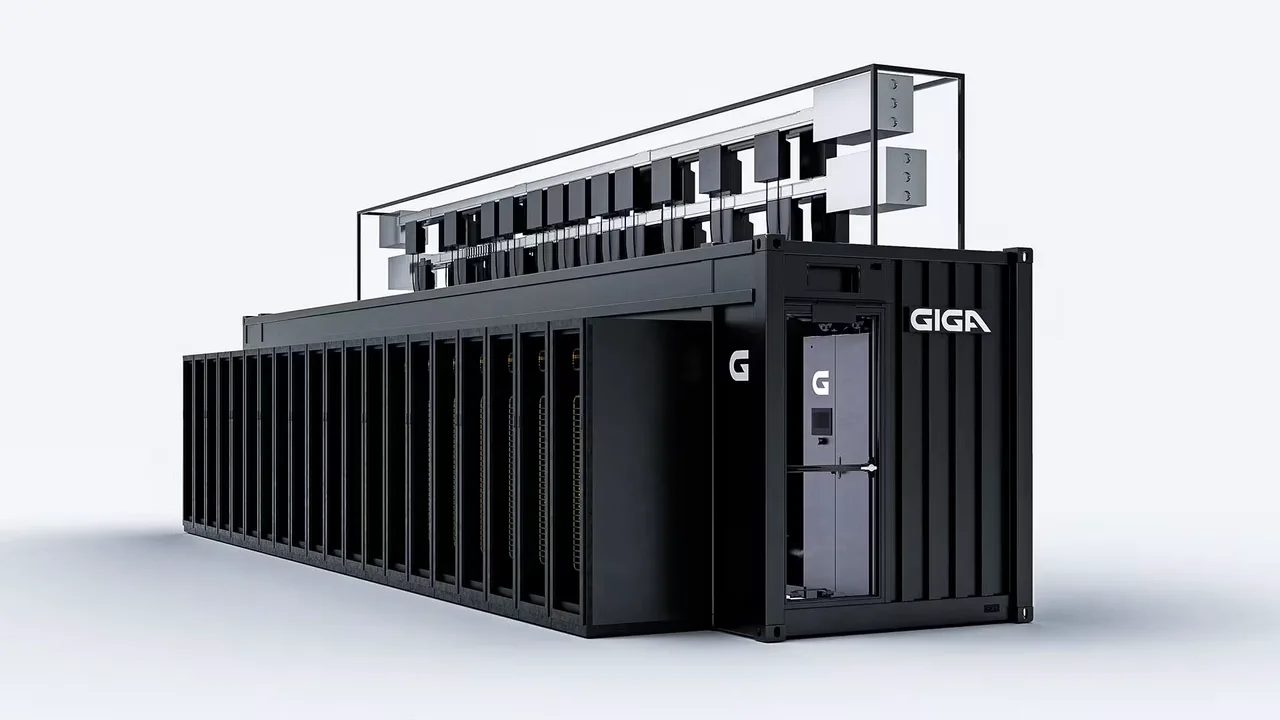
GigaPod power distribution
In most data center builds, overhead and underfloor systems are separate scopes of work. These projects are handled by different trades running on different schedules, and the coordination between them happens on-site. With the GigaPod, that work is already done by the time your GigaPod arrives.
Power comes in from the top. An overhead busway system runs the length of the module and drops power whips down to each rack. Water cooling runs in the opposite direction, under a raised, pre-fabricated floor, routed to each rack from below.
None of this gets assembled on your site. Instead, it arrives integrated, tested, and ready to connect, reducing delays and helping you get your compute online faster.
How cooling works with the GigaPod
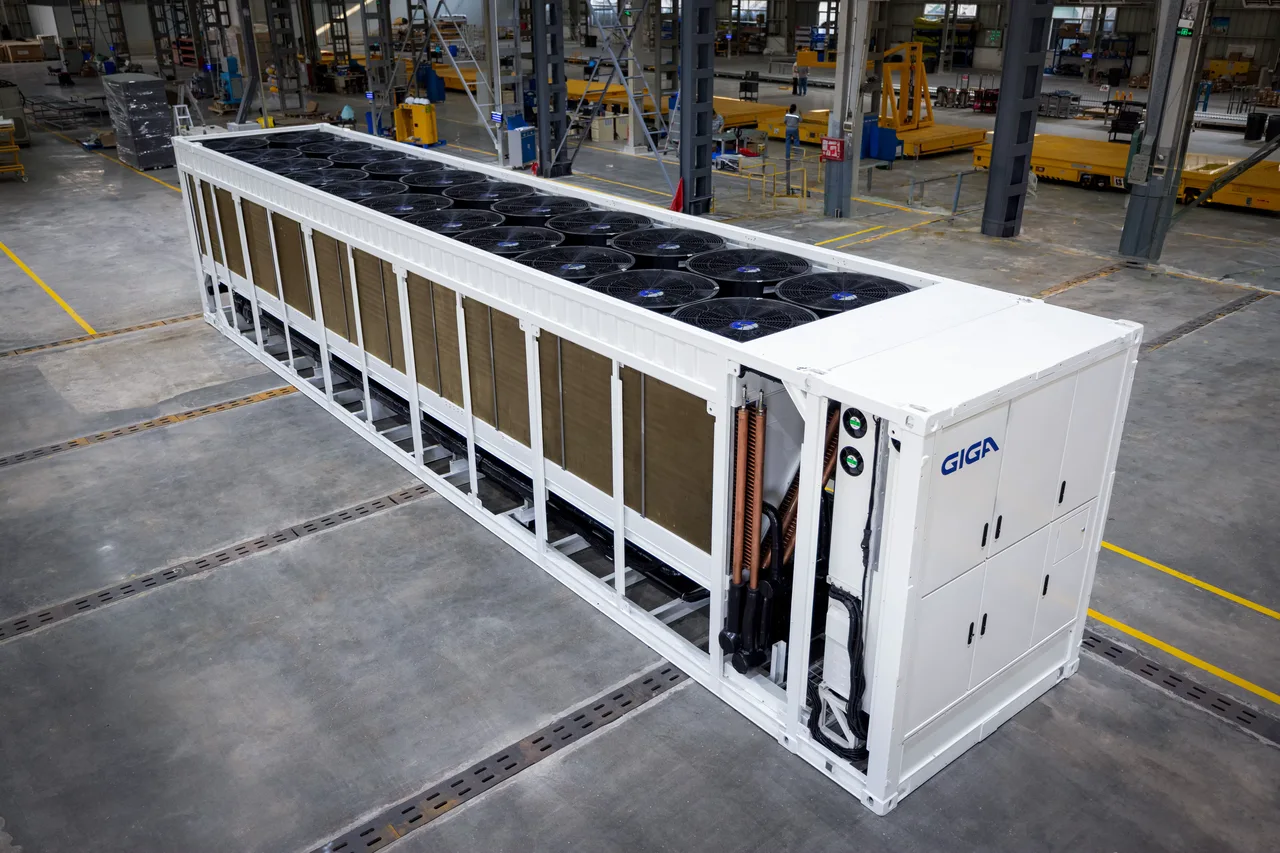
Each GigaPod includes 2 CDUs (cooling distribution units) that route chilled water to every rack in the module. The CDUs share a primary water loop with the pod's fan wall units. By integrating both systems into a single loop, we simplify the overall design and can test cooling performance before the unit ships.
The fan walls handle the ambient environment inside the pod. Their job is to manage the heat that racks release into the space, maintaining positive pressure so the module stays thermally stable under load.
We integrate the fan wall and CDU systems ourselves, working directly with our supply chain. This complete vertical integration limits troubleshooting on-site during connection and commissioning.
How the GigaPod fits into the broader GigaBase system
The GigaPod is central to Giga’s data center system, but it doesn’t operate on its own. Each pod connects to the shared infrastructure that makes up the rest of the GigaBase system. As a brief overview of the other modules:
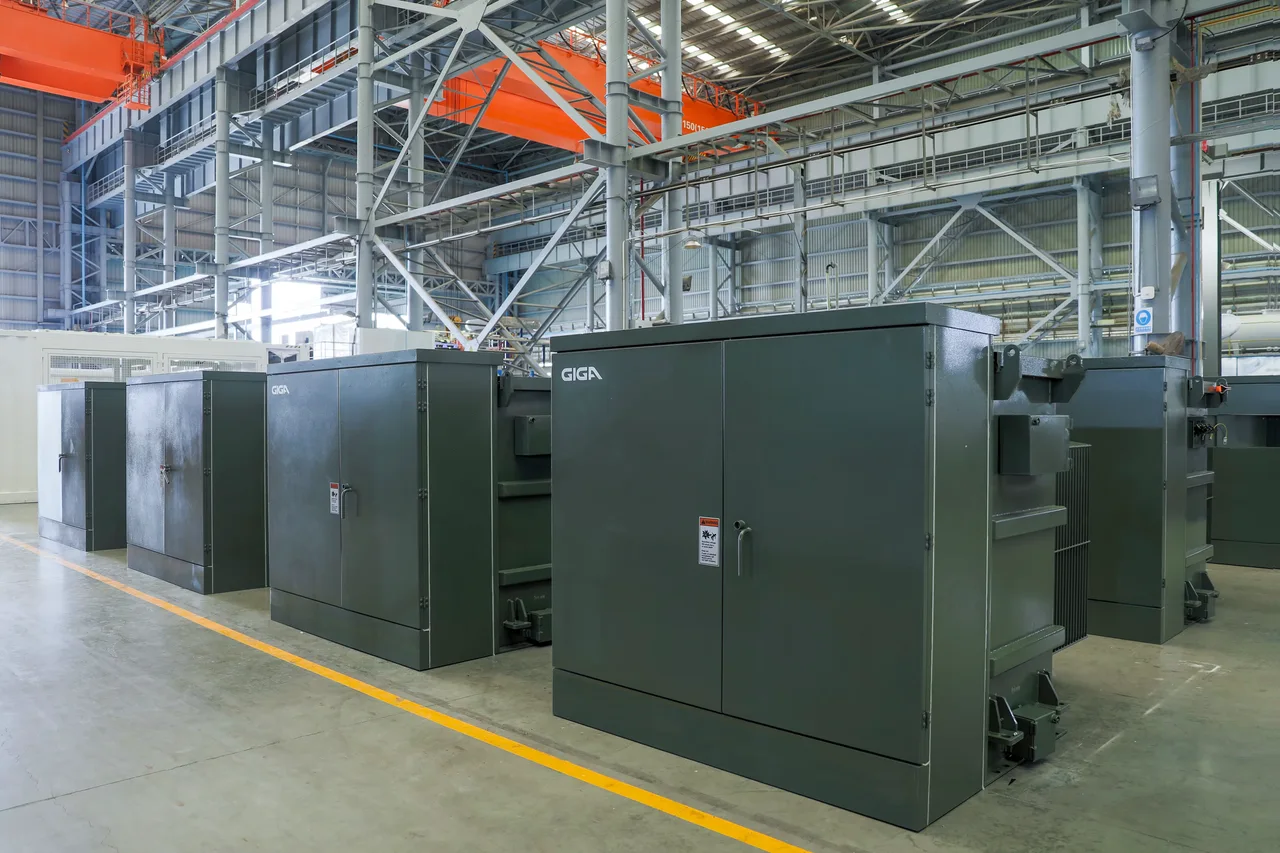
- Power Module: A single-skid unit pairing a 5000A LV switchboard with a 3.6 MVA transformer that handles all MV-to-LV power conversion for the GigaPod and the modules it shares infrastructure with.
- UPS E-House: A 3.0 MW bridge unit that keeps the GigaPod running through the gap between utility power loss and generator startup.
- Generator Module: A 3.3 MW diesel backup unit that comes online when utility power fails, providing the GigaPod with up to 24 hours of runtime before needing to be refueled.
- Chiller Module: A 2 MW heat rejection unit that combines dry cooling and refrigerant-based chilling. Ambient airflow handles the water loop under normal conditions, and the chiller steps in when high-density XPU loads demand colder water temperatures.
- Glue Modules: Proprietary electrical and mechanical interconnects (busways, water conduits, and power connections) that link every module in the GigaBase system together.
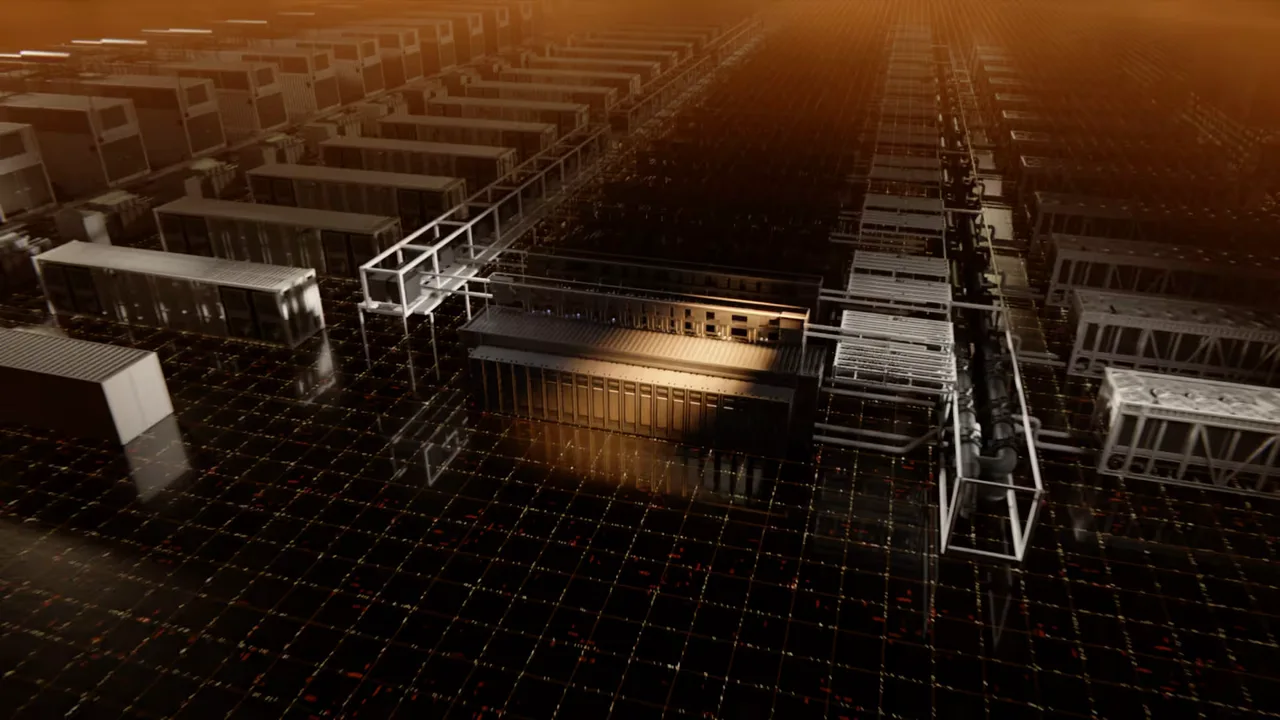
GigaBase deployments start at 8.4 MW and scale to a full campus. The GigaPod module stays the same at every scale. This pre-engineered design allows you to add capacity without needing to re-engineer your white space to accommodate every change.
If you want the full picture of how GigaBase works, review our deep dive into GigaBase.
The GigaPod is what compute-ready white space looks like when it's built in a factory
White space is often a timeline killer for data center construction projects. With field assembly and sequential construction across multiple trades, the traditional build process can’t move at the pace AI compute demands.
The GigaPod is built on a different premise: that most of that work doesn't belong on your site at all.
With our data center system, each module leaves our factory integrated, tested, and ready to connect. You can rack whatever compute architecture you need to, make a few simple plug-and-play connections on site, and get your compute online in as little as half the time of an average data center build.
Get in touch with the Giga team to talk through what a GigaBase deployment looks like for your project.
.png?w=1280)