.avif?w=1280)
You need reliable power distribution for your data center, and an off-the-shelf switchboard might not cut it. With AI deployments pushing data center buildouts to move faster than ever, getting your power distribution right the first time is more important than ever.
Depending on your specific needs, a generic switchboard might not match your voltage levels, amperage requirements, or space constraints. But ordering a custom switchboard can feel overwhelming. What specifications do you need to include? And, just as importantly, how can you keep the lead times as short as possible while still getting the specs you need?
This guide walks you through the process of sourcing and specifying a custom switchboard. We'll cover requirements analysis, certification and code compliance, component specification, manufacturer selection, and timeline planning.
.avif)
Understanding custom switchboards for data centers
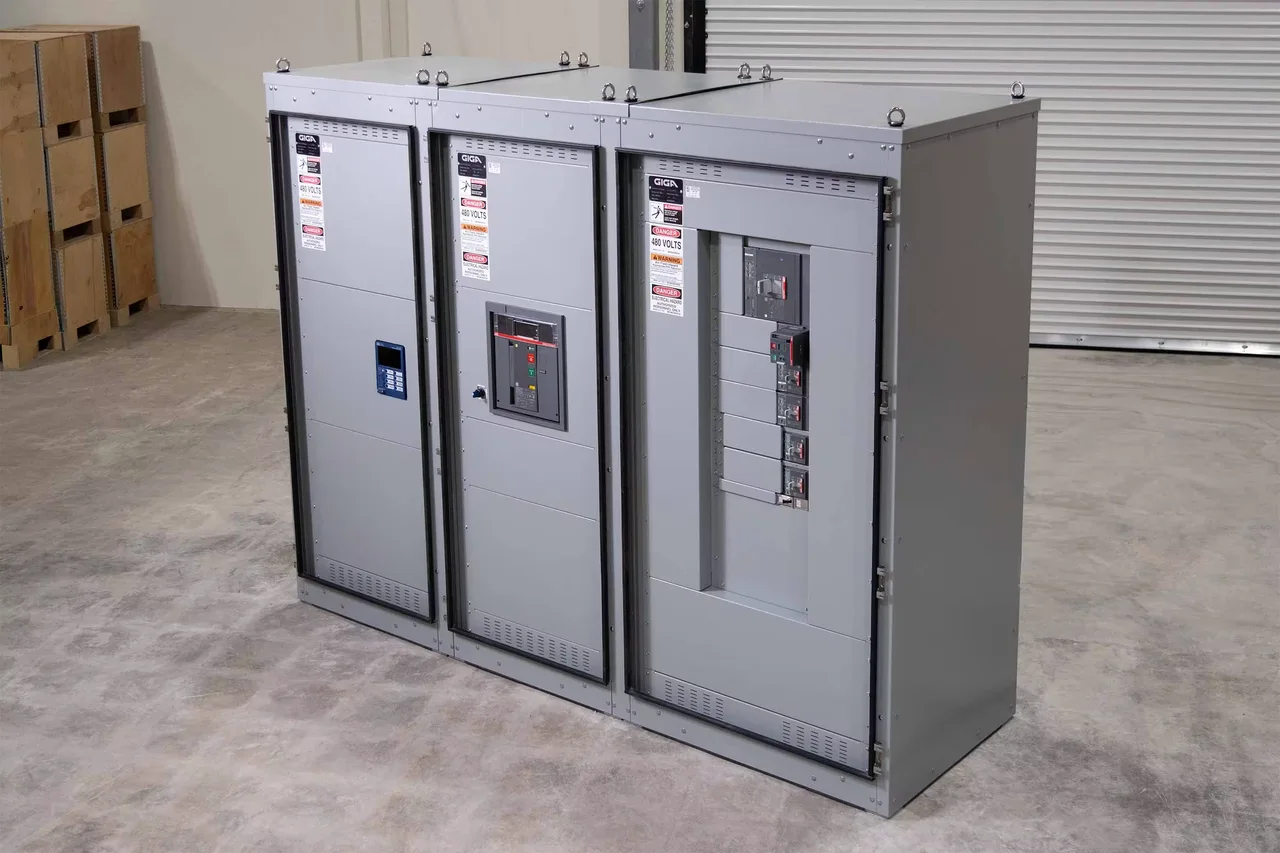
When you source a custom switchboard, you can choose specifics such as voltage levels, amperage ratings, bus bar configurations, NEMA ratings, and more. Sourcing a custom switchboard can feel like more work upfront, but if you get it right, you’ll end up with the specifications and metering systems your facility actually needs.
Before we get into the nitty-gritty of selecting a custom electrical switchboard, let’s cover the differences between switchboards and switchgear.
- Switchboards (UL 891) distribute power at 1000V or less and are the right fit for most commercial data centers and applications. They’re straightforward, cost-effective, and faster to procure.
- Switchgear handles medium voltage (1001V and above) and offers more sophisticated protection and control. There are also low-voltage switchgear options rated at 1000V or less, but that equipment is more robust than most commercial applications require, carries a higher price tag, and has longer lead times than a UL 891 switchboard.
Some data centers need both: switchgear at the utility interconnection, switchboards downstream for distribution.
Understanding what type of equipment you actually need for your data center helps you avoid over-specifying (and overpaying) or under-specifying (and risking downtime).
A custom switchboard built to your exact power requirements, uptime standards, and other needs is key to keeping your data center efficient and profitable. Let’s cover the five-step process for specifying the right custom switchboard for your use case.
Step 1: Define your project requirements
Start your spec by establishing your electrical needs. Calculate your total power demand in kilowatts, then convert it to main bus amperage. For most data centers, you’re looking for something between 1000A and 5000A.
Next, identify your voltage levels. These will vary depending on what you're powering: 415Y/240V is common for standard IT loads or 480Y/277V for mechanical loads.
Then, measure the available space in your electrical room. Consider the width, depth, height, and how many sections you can actually fit. Map out where cables enter and exit, and determine the NEMA enclosure rating you need based on your application and setting.
Finally, nail down some operational details:
- Uptime requirements and redundancy architecture (N, N+1, 2N): this drives your entire design
- Metering and monitoring needs: basic panel meters or revenue-grade with remote capabilities?
- Arc flash mitigation features: protecting personnel isn't optional
- Integration with BMS or DCIM: your switchboard needs to talk to the rest of your infrastructure
AI-heavy facilities often see significantly higher power density per rack than traditional IT environments, making accurate load calculation even more critical. Be sure to get these requirements clear upfront. Changing your mind mid-project forces rework that costs you extra time and money.
Step 2: Ensure code compliance and certification
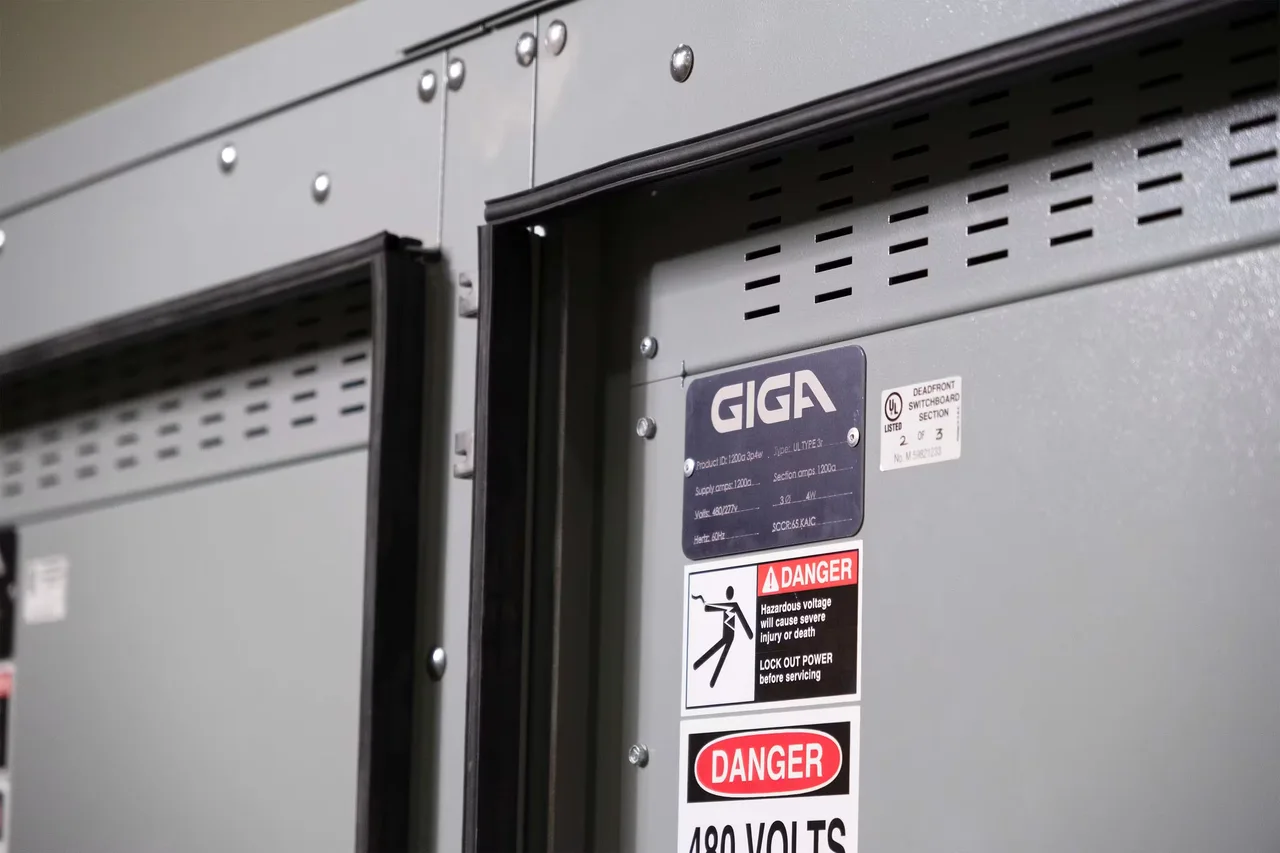
UL 891 is the safety standard for low-voltage switchboards. This certification covers construction, testing, and performance requirements. You’ll want to work with a manufacturer that can certify assemblies directly at its facility, rather than one that must wait for third-party evaluations for every configuration.
You also need to calculate your AIC (Ampere Interrupting Capacity) rating. This rating tells you how much fault current your switchboard can safely interrupt without catastrophic failure. AIC changes at every critical connection point based on transformer specs, utility source type, and wire runs, and it’s critical to get it right. If you calculate your AIC wrong, your protective devices won't protect anything.
Step 3: Specify components and features
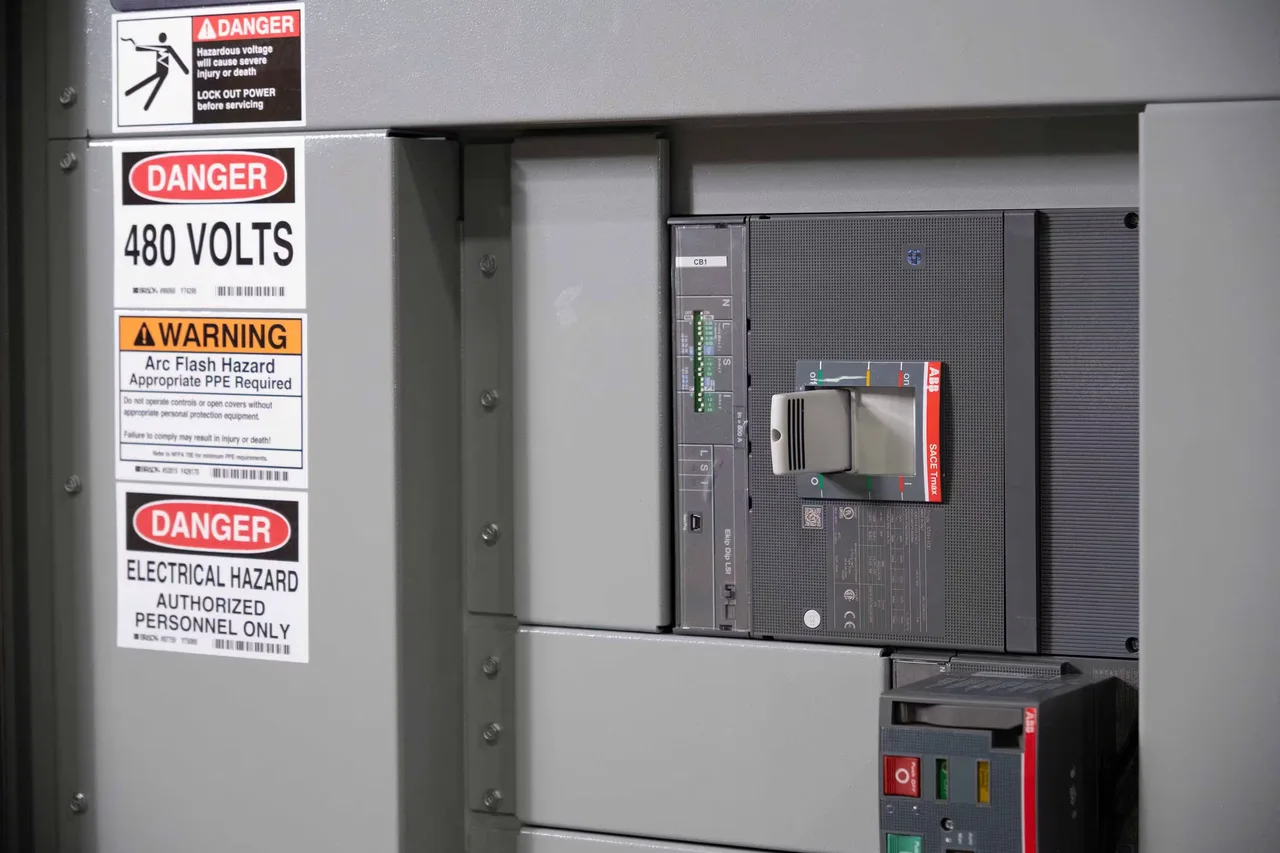
Next, you need to specify your switchboard’s components and features. Start with your circuit breakers. Your main circuit breakers will do your heavy lifting, so specify them carefully. Molded case circuit breakers (MCCBs) aren't one-size-fits-all, and your use case will dictate what you need.
Sizing feeder breakers comes down to matching your downstream distribution needs. Spec too small and you'll trip circuits under normal load. Spec too large and you're simply overspending — bigger breakers cost more, and you're paying for capacity you don't need.
Next, consider protection and safety features:
- Surge protection devices (SPDs)
- Arc flash reduction systems (AFRS)
- Ground fault protection (GFCI)
- Mechanical interlocks
- Electrical interlocks (ATS)
- Lockable enclosures
You might also spec smart circuit breakers with electronic trip units to get predictive diagnostics and health monitoring features. Connect everything to your DCIM software, and you've got real-time energy tracking across your entire facility. As a bonus, integrated metering shrinks your footprint. When metering is built into the breakers instead of bolted on as aftermarket boxes with extra wiring, you free up rack space.
Related read: Electrical switchboards: The buyer’s guide to design, installation, and maintenance
Step 4: Select the right switchboard manufacturer
If you want the right custom switchboard for your data center, you need to pick the right partner.
First and foremost, look for a manufacturer with UL 891 certification. You’ll also want a partner who offers in-house engineering support and who has experience building high-quality custom switchboards for data centers.
Geographic coverage matters too. You want a partner who can support you locally, not an overseas facility with a radically different time zone. A few additional questions you might want to ask during your search to set yourself up for success:
- What's your standard lead time vs. expedited options?
- Do you offer design review before we commit to specs?
- What testing protocols do you follow?
- How do you handle changes or custom modifications?
- What's your approach to documentation and labeling?
- Do you provide on-site commissioning support?
Giga builds custom switchboards at industry-leading speeds. We work directly with your team during the design process, then manufacture your custom equipment in-house. Instead of dealing with half a dozen different vendors, when you work with Giga, you get one accountable partner for everything.
Step 5: Plan for lead times and project timeline
Finally, remember to plan for lead times. Depending on your manufacturer and design complexity, a custom switchboard will take a few weeks to several months to produce. You also need to remember testing and certification requirements, as well as any additional logistics, such as shipping.
Strategies to avoid delays:
- Order critical long-lead components early
- Provide complete, accurate specifications upfront
- Build a buffer into your project schedule
- Maintain open communication with your manufacturer
- Plan for factory testing witness points
Coordinate your custom switchboard order with your overall construction schedule: Is the electrical room ready? Have you coordinated utility interconnection timelines? When are commissioning and testing windows? Take the time to get your construction schedule in order upfront to save yourself trouble later.
Getting a custom switchboard for your data center: Next steps
Data centers can't afford to get switchboards wrong. You’re operating with tight margins, tighter deadlines, and no room for equipment that doesn’t work for your application. When you follow these five steps, you can avoid the headaches and spec the right custom switchboard from day one.
But specifying the right equipment is just one piece of the puzzle. If you want the right switchboard on the right timeline, you also need to select the right manufacturer.
You need someone who understands data center requirements, can handle the engineering complexity of custom orders, and delivers when they say they will.
That's where Giga comes in.
We manufacture switchboards with industry-leading lead times, work directly with your team from spec to delivery, and handle the technical details so your project stays on track. Build a quote or get in touch with our team today to learn more.