Industrial switchboards are the backbone of your facility’s power distribution system, so you need to be sure you’re specifying the right one. If you get the specs wrong, you’ll face downtime, compliance issues, and a higher risk of failures.
But how can you spec an industrial switchboard correctly from the start?
This guide walks through the practical steps for specifying an industrial switchboard. It's written for engineers, contractors, and procurement teams who need a simple reference guide to make switchboard specification as straightforward as possible.
.avif)
What is an industrial switchboard (and why does it matter)?
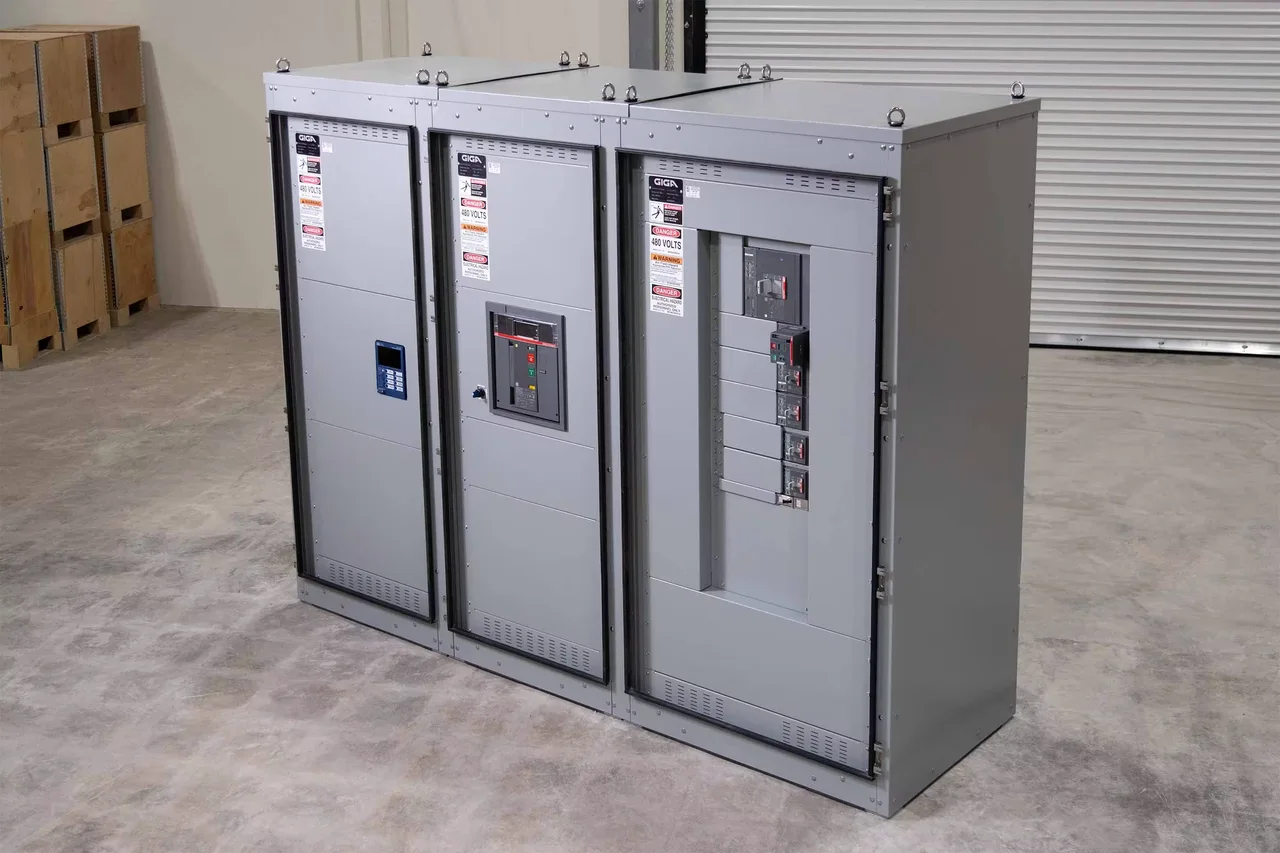
An industrial switchboard is a free-standing enclosure that takes a single incoming power feed and distributes it across multiple branch circuits throughout your facility. Your switchboard is the central hub of your low-voltage power distribution system, and everything downstream depends on it working correctly.
An electrical switchboard has multiple key components, like busbars, molded-case circuit breakers (MCCBs), metering equipment, and more. Most industrial switchboards handle up to 600V with bus ratings that can reach 6,000A, depending on your facility's power demands.
Specifying the right switchboard is critical if you want to run a safe, efficient operation. If you undersize, you might run into overloads and system failures, and if you choose the wrong custom components, you’ll sacrifice reliability in the long run.
In short, you really need to take your time preparing your switchboard spec. It's not the most exciting piece of infrastructure, but it's one you can't afford to get wrong.
Understand your application before you spec
The first step to specifying your switchboard appropriately is understanding your application. Before you approach a vendor for a quote, you need to know three things:
- What type of facility you’re powering
- How much load you’re actually handling
- How your system needs to be configured
Let’s examine the specifics.
Identify your facility type and load requirements
Different facilities have different priorities. Data centers care about redundancy and uptime, whereas manufacturing plants prioritize high-amperage capacity. Keep your facility type and priorities in mind throughout the specification process.
Next, you need to calculate your load. What's your total power demand in kilowatts? This number drives your main bus amperage requirements. If you're running 1kW of equipment, you're likely looking at a switchboard rated for 2,000A or higher running at 480V.
Remember to plan for expansion during this step. If you know you'll add more load in the next few years, size the bus to handle it now. Adding capacity to an existing switchboard is harder and more expensive than building it from the start.
Determine voltage and system configuration
Voltage selection can seem fairly basic, but it’s an important detail that causes problems if you get it wrong. So, what voltage do you need?
Most commercial and industrial projects run on 480Y/277V. When you need to step down for lights, outlets, and smaller loads, you'll drop to 208Y/120V. Check with your utility supply and downstream equipment to ensure your switchboard specs align.
You also need to know your system configuration (delta or wye). This affects grounding, neutral requirements, and how your loads connect. Get this information from your electrical engineer or utility provider before you move forward.
Main vs. distribution switchboards
Finally, remember that not all switchboards serve the same role in your facility. A main switchboard receives power directly from the utility and distributes it throughout your site. A distribution switchboard takes power from the main and feeds it to specific floors, sections, or equipment clusters.
In a large facility, you might have one main switchboard feeding three or four distribution boards across different zones. Plan your layout carefully during the design and specification phase, as setting up the right hierarchy makes troubleshooting easier and simplifies maintenance.
Check code compliance and safety standards
If you spec a switchboard that doesn’t meet code, you will be stuck with delays and rework before your utility or inspector will approve it. In this section, we’ll discuss some common certifications and safety standards you need to consider when specifying your switchboard.
UL 891 certification
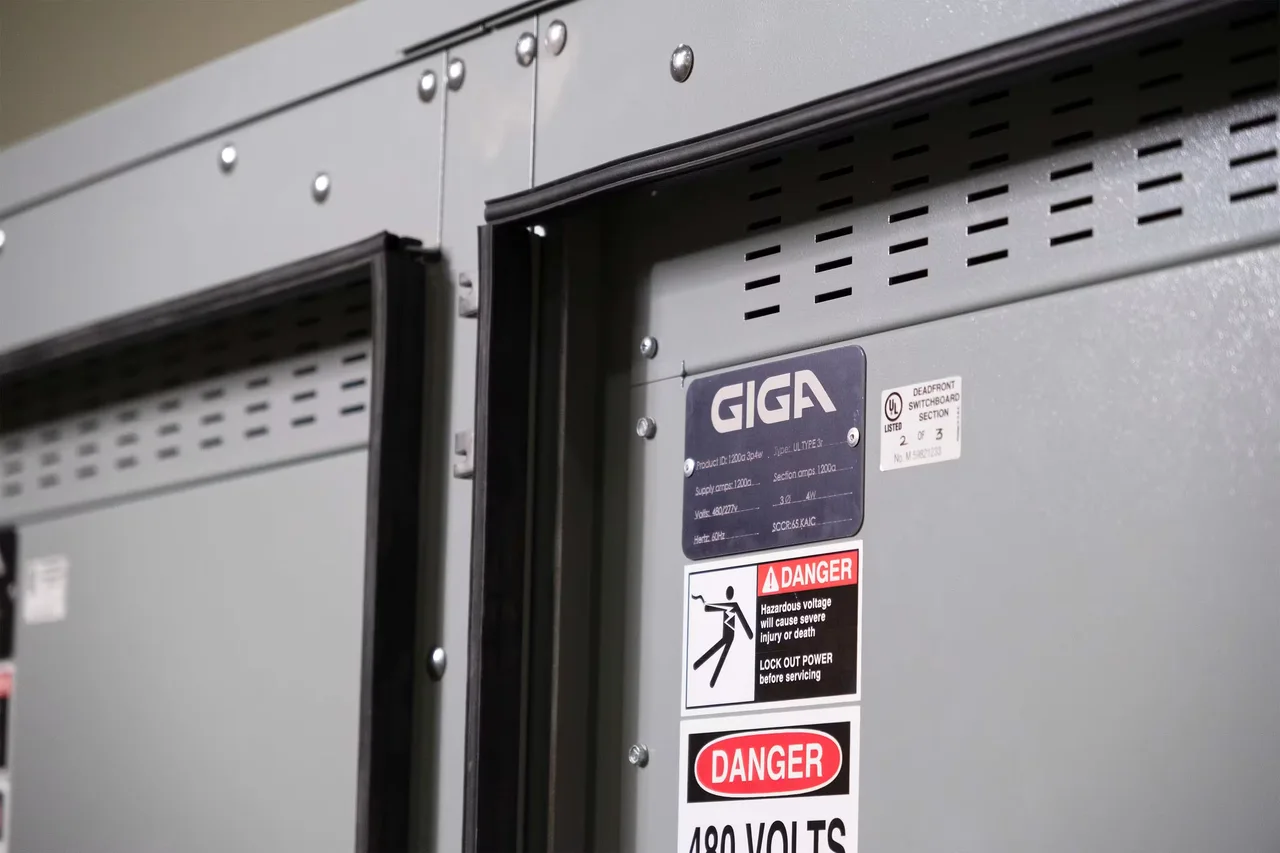
UL 891 is the U.S. product standard for dead-front distribution switchboards rated 600V or less. If your switchboard is UL 891 listed and labeled, it means the assembly has been tested for fire resistance, electrical shock hazards, mechanical strength, and insulation integrity.
UL 891 is the baseline for safe, reliable equipment, so be sure you always specify "UL 891 listed and labeled" in your RFQ.
When the switchboard arrives, request the full documentation package: nameplate data, label location, and Factory Acceptance Test (FAT) reports. These details help you verify that your switchboard is, in fact, UL 891 certified.
NEC Article 408 requirements
NEC Article 408 covers the installation, working space, grounding, and bonding requirements for switchboards.
The key rules are straightforward:
- Install the switchboard straight, plumb, and accessible with proper clearances.
- Don't place it in hazardous or corrosive locations unless the enclosure is specifically rated for that environment.
- For service-entrance switchboards, follow the utility's grounding and bonding requirements to the letter.
Inspectors check these details, and if your installation doesn't meet code, you're not getting approval, so you’ll want to plan for these details from day one.
Local utility and regional codes
NEC provides national guidelines, but you need to consider local and regional codes, as well. Many utilities have specific requirements for metering provisions, grounding schemes, and fault current ratings. Some municipalities adopt different versions of the NEC or add their own amendments.
Coordinate with your utility provider during the design phase. Confirm tie-in requirements, short-circuit expectations, and any special metering or disconnect provisions they need. This homework prevents surprises during permitting and keeps your project on schedule.
Related read: Understanding UL 891, EUSERC, & Annex G
Select the right components and specifications
Once you understand your application and code requirements, it's time to make the technical decisions that define your switchboard. This is where you lock in the components that determine whether your system can handle the power demands, protect against faults, and support future operations.
Main bus amperage and interrupting capacity
Your main bus rating has to align with your total power demand. Typical sizes range from 400A to 4,000A.
Next, consider two different fault ratings:
- Interrupting capacity (AIC) tells you the maximum fault current a breaker can safely interrupt.
- Short-Circuit Current Rating (SCCR) tells you the maximum fault current the entire assembly can withstand at the incoming terminals.
Your assembly's SCCR must meet or exceed the available fault current at the incoming terminals, and every breaker's AIC must be adequate at the point where it's installed.
Main circuit breakers and disconnect switches
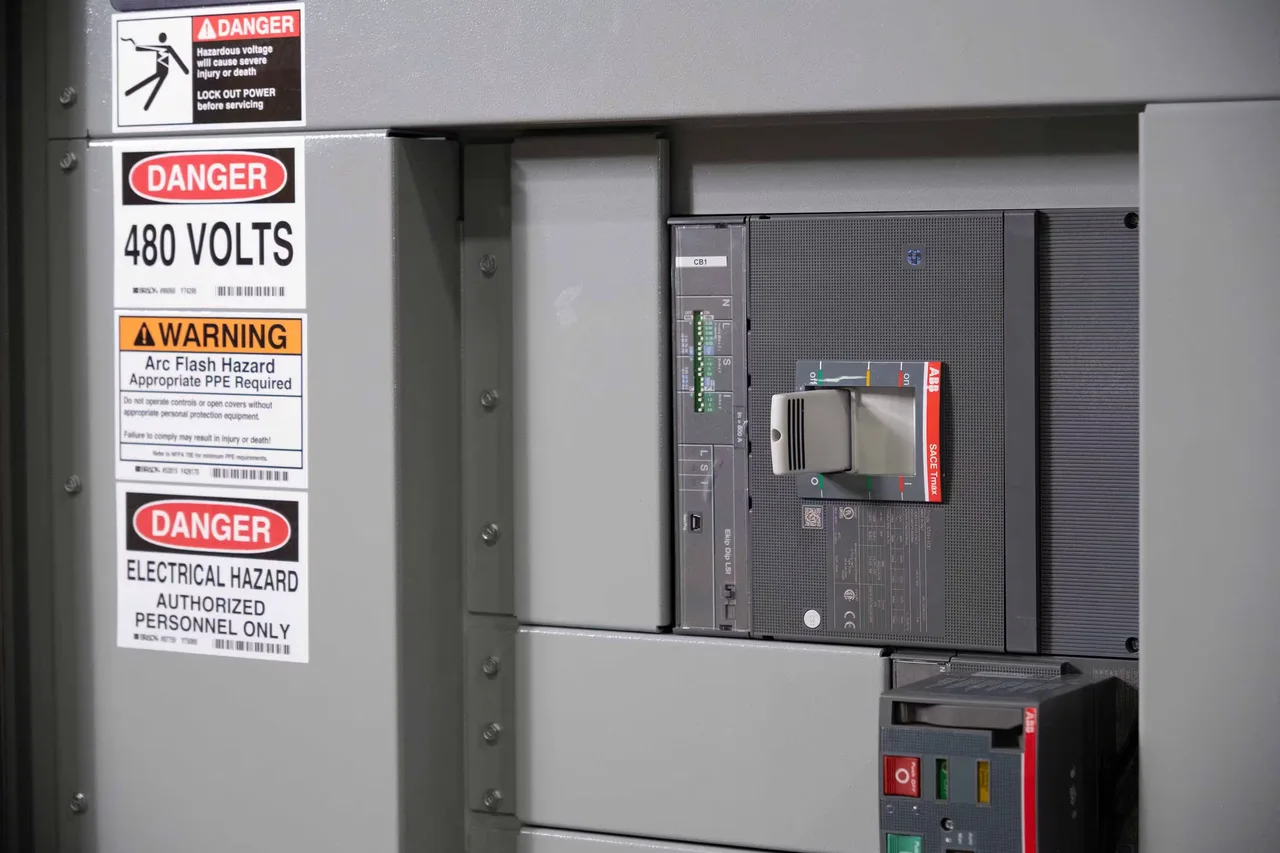
Molded-case circuit breakers control and protect your entire system. They come in different varieties depending on your needs:
- Mission-critical MCCBs for high-reliability applications
- Motor circuit protectors (MCPs) for motor loads
- DC circuit breakers for systems running on direct current
Each type is built for a specific role, so match the breaker to the application.
Disconnect switches are simpler. These switches provide isolation for maintenance or act as the service entrance shutoff. When to use a disconnect versus a breaker often comes down to code requirements, project specs, or how your maintenance team prefers to work.
Feeder breakers and protection features
Feeder breakers distribute power from your main switchboard to different areas of your facility. Each section with different electrical demands should have its own breaker, and the amperage rating needs to match the power demand for that area.
Beyond basic overcurrent protection, you can add features that improve safety and reliability:
- Surge protection shields your equipment from voltage spikes caused by lightning, power grid fluctuations, or sudden outages.
- Arc flash protection reduces the risk of electrical explosions that can cause serious injuries. (NEC 240.87 requires arc flash protection for overcurrent devices rated 1,200A and above).
- GFCI protection (Ground Fault Circuit Interrupters) protects people from electric shock, especially in wet or high-risk environments where ground faults are more likely.
These features aren't required on every project, but they're worth considering depending on your facility’s location, load, and needs.
Metering and remote monitoring
You must also consider metering and remote monitoring add-ons during the specification process.
Basic metering starts with current transformers (CTs), which are standard on most switchboards. You'll choose between standard-grade CTs for general monitoring or revenue-grade CTs if you need precise measurement for billing or cost allocation. Both do the job, but revenue-grade gives you tighter accuracy.
Depending on your system, you might also need voltage transformers (VTs) or potential transformers (PTs) to step down voltage for accurate measurement.
If you want to go further, smart metering solutions let you monitor energy consumption, system performance, and fault detection remotely. This is especially valuable in large facilities and data centers. It's not required, but it's a worthwhile investment if uptime and efficiency matter to your operation.
Plan the physical layout and enclosure
Specifying the switchboard itself is only one part of the project. Before you specify your switchboard, you need to plan your physical layout. Account for footprint, clearances, cable routing, and enclosure protection.
Sizing and footprint
Before you finalize your switchboard spec, measure your electrical room. You need to account for width, depth, height, and ventilation clearances. Switchboards are usually floor-mounted and can take up significant space, especially if you're running multiple sections for incoming feeds, metering, surge protection, and feeder circuits.
Plan your cable entry and exit points now. Clean routing makes installation easier and is key to keeping maintenance straightforward down the line. NEC also requires specific working space in front of and around switchboards, so be sure to account for that space when planning your layout.
Enclosure ratings (NEMA and IP)
Your switchboard enclosure needs to protect the internal components. Use an enclosure’s NEMA rating to identify which one is right for your environment.
- NEMA 1 is the standard for indoor, dry locations. This covers most commercial buildings where the switchboard sits in a dedicated electrical room with climate control.
- NEMA 3R is designed for outdoor installations. It protects against rain and weather, making it the go-to choice for switchboards mounted outside or in partially exposed areas.
- NEMA 4X is waterproof and corrosion-resistant. Use this for harsh or wet environments like industrial facilities with washdown areas, coastal locations with salt exposure, or anywhere dust and moisture are constant concerns.
Safety features and accessibility
Beyond the basics, you may want to consider some of the following safety features:
- Kirk Key interlocks: These mechanical devices prevent accidental switching between power sources.
- Insulated bus bars: These reduce the risk of short circuits and add another layer of protection for anyone working inside the switchboard.
- Lockable doors: This safety feature works to prevent unauthorized access to the space where live components are housed.
Finally, consider accessibility. Most switchboard installations are front-accessible only, which keeps the footprint smaller and works well when the equipment is mounted close to a wall. If you need easier access for installation and maintenance, rear-accessible switchboards give you more room to work, but they're deeper and require more floor space.
Related read: Understanding transformer safety standards
Account for lead time and coordination
If your project requires a custom switchboard with specialized components, you’ll want to ensure you’re taking lead time into account when planning your project timeline.
Circuit breakers, protective relays, and specialty enclosures are often the longest-lead items in a switchboard build. Depending on your vendor and current demand, some components can take weeks or months to source. The best course of action is to submit an accurate spec as early as possible to allow for possible delays or long lead times.
It’s important to communicate directly with your supplier and get realistic timelines during the specification process. A good supplier will tell you upfront what your expected lead time is and where any potential delays might happen.
You’ll also want to work with a vendor, like Giga Energy, that has control over the entire supply chain. When you work with a supplier with that type of granular control over the manufacturing process, you can get more accurate lead time estimates upfront.
How to spec an industrial switchboard the right way
Specifying an industrial switchboard comes down to understanding your application and load requirements, verifying code compliance, selecting the components that suit your needs, and communicating clearly with your supplier.
Following the steps in this guide should help you get clearer, more accurate quotes from day one. But the difference between a good spec and a great one often comes down to the supplier you work with. Responsive service, engineering support, and transparent communication from quote to commissioning make the process faster and less stressful.
At Giga, we build switchboards with fast lead times, flexible customization without delays, and hands-on engineering support from the first conversation through installation. We're not handing you off to a call center or making you wait weeks for answers. You work directly with our team, and we make sure your switchboard is built right the first time.
Ready to spec your next switchboard? Contact our team today to discuss your project requirements and get a fast, accurate quote.
.avif?w=1280)