At first glance, panelboards and switchboards appear to do the same job. In some ways, they do. Both panelboards and switchboards organize electrical distribution and protect circuits with overcurrent devices, but that’s where the similarities stop.
This post breaks down the key differences between panelboards and electrical switchboards. We will walk through the technical distinctions, typical applications, and decision criteria you need to spec the right equipment the first time.
We'll cover what each type of gear is built for and how to size your distribution equipment based on your facility’s load requirements.
.avif)
Panelboard vs switchboard: Core concepts in electrical distribution
Every electrical system needs two things: a way to distribute power where it's needed, and a way to protect that system when something goes wrong. Electrical distribution equipment takes incoming power and routes it safely to the circuits, machines, and equipment that run your facility.
Overcurrent protection devices, or OCPDs, are at the heart of any distribution system. OCPDs are devices (like circuit breakers and fuses) that blow or trip when there is too much current flowing through a circuit. Without these devices, an electrical fault can damage downstream equipment or cause safety issues like fires.
Panelboards and switchboards are the enclosures that house the breakers and organize your power distribution system. Both do similar work; the difference comes down to the scale and applications they’re best suited to.
Choosing between a panelboard and a switchboard impacts your project budget, your facility layout, your maintenance operations, and your long-term capacity. Pick the wrong one, and you might overspend on equipment you don't need. Or worse, you might undersize your distribution system and hit a capacity wall when you need to scale.
Related: Get a custom quote on a UL 891 switchboard.
What is a panelboard?
A panelboard is an electrical distribution unit typically mounted on the wall in a compact cabinet. This is a breaker box accessible only from the front that allows you to distribute power to multiple circuits.
Panelboards are built to UL 67 standards, which set the requirements for construction, performance, and safety. They use a dead-front design, meaning there are no exposed live parts when the cover is closed. You can safely open the door without risking contact with energized components.
Capacity and voltage limits
Panelboards max out at 1,200 amperes of capacity. Most panelboards operate at 600 volts or less, though some manufacturers offer units rated for 277V or higher in specific configurations.
Physical installation
Panelboards are either flush-mounted or surface-mounted. A flush-mounted panel sits inside the wall, requiring a deeper stud cavity. Surface-mounted panels attach directly to the wall surface and don't require recessing.
Common panelboard applications
Panelboards are the workhorse of residential and commercial power distribution. You'll find them in nearly every building type, from single-family homes to office complexes.
- Residential settings: The breaker boxes found in garages, basements, and utility closets are panelboards.
- Commercial buildings: Retail stores, office buildings, restaurants, and small medical offices rely on panelboards to distribute power to lighting, HVAC, receptacles, and equipment.
Facilities with loads under 1,200A benefit from using panelboards because they deliver the capacity these facilities need without the cost, space, or complexity of a switchboard. They're also less expensive to buy and install and don’t take up floor space.
What is a switchboard?
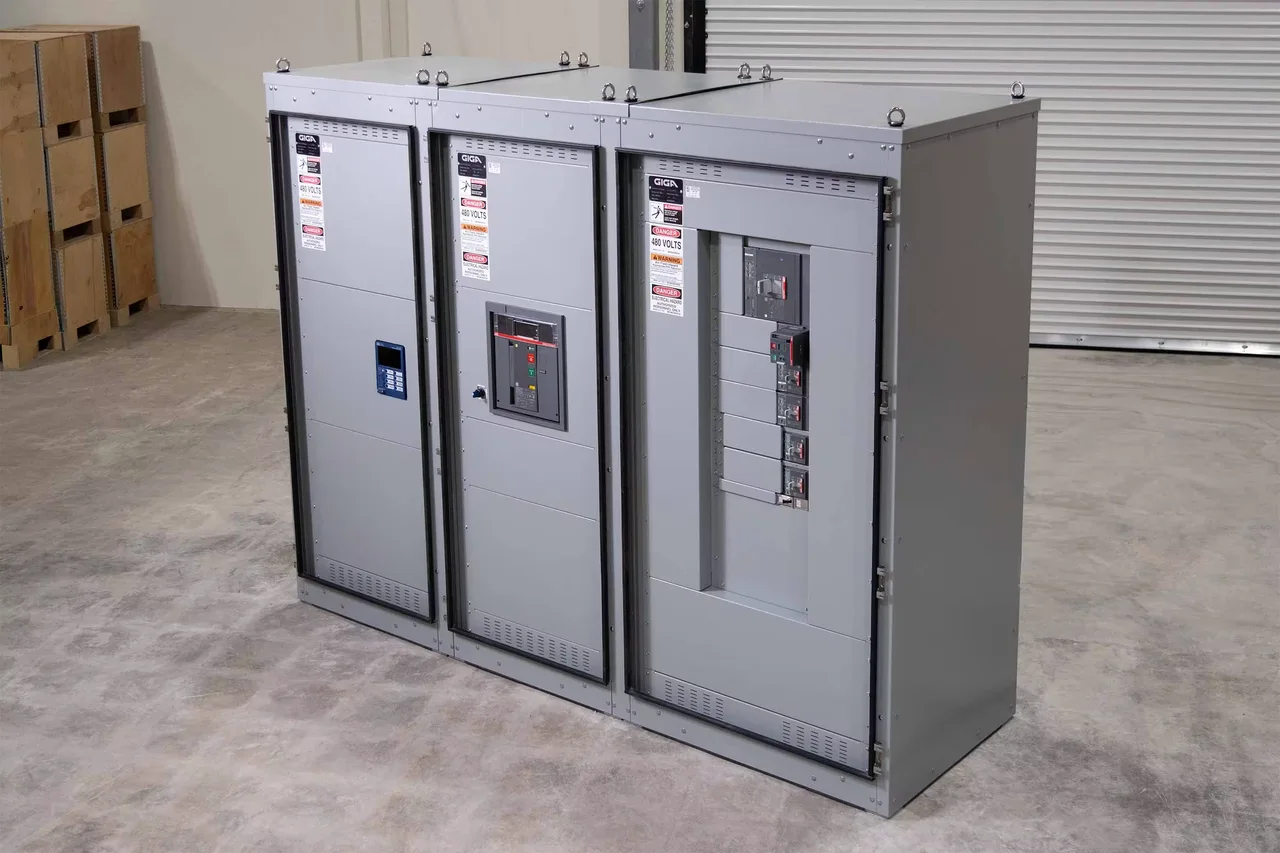
A switchboard is a freestanding electrical distribution assembly designed to handle higher power loads and more complex configurations than a panelboard. Switchboards are floor-mounted and accessible from both the rear and front for installation and maintenance.
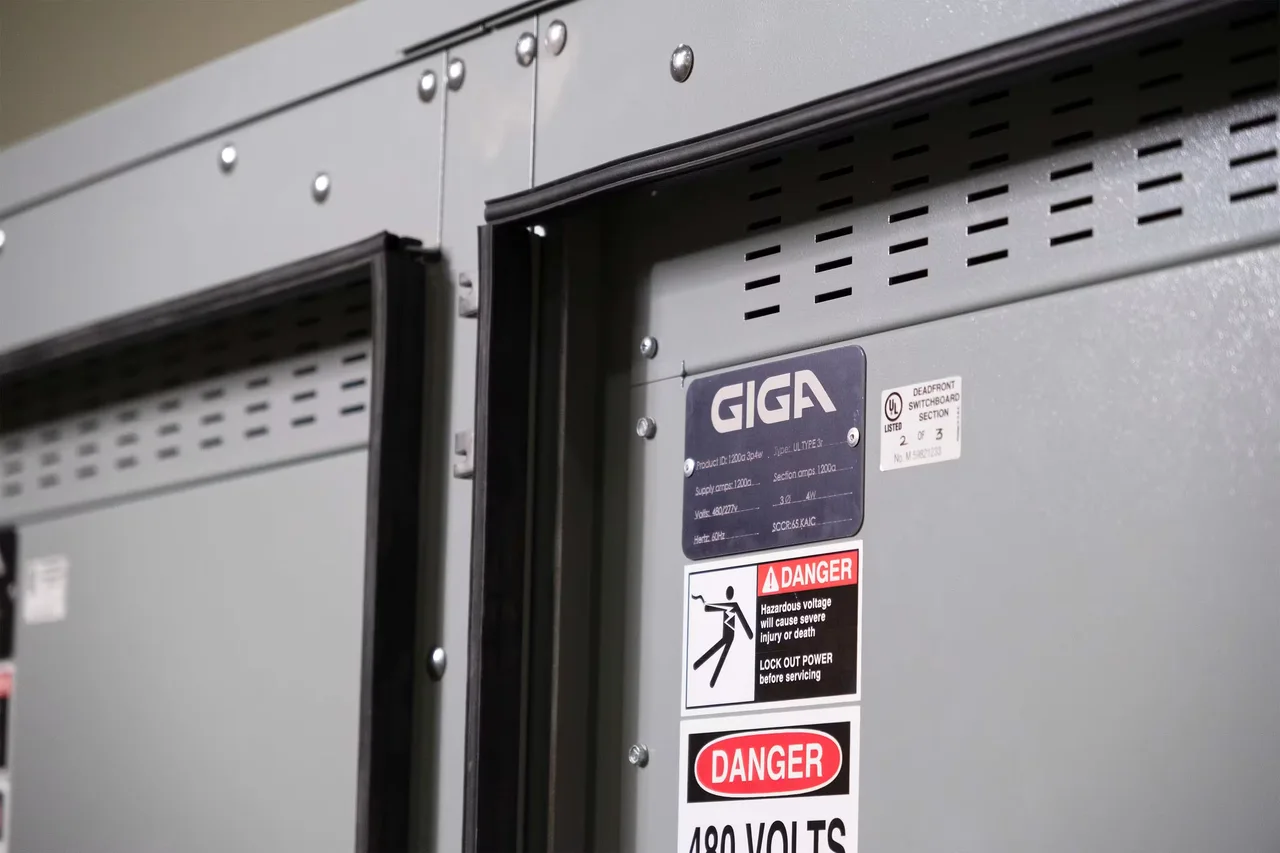
Switchboards are built to UL 891 standards, which govern low-voltage switchboards and include stricter requirements for wire bending space, heat dissipation, and construction than the UL 67 standard for panelboards. Because of these requirements, switchboards are larger, heavier, and built for environments where power demand and operational flexibility matter.
Capacity and voltage range
Switchboards typically handle 1,200A to 5,000A, though custom configurations can push even higher than that depending on your manufacturer’s capabilities. Like panelboards, most switchboards operate at 600 volts or less, making them suitable for standard commercial and industrial low-voltage systems.
Physical installation and construction
Switchboards are floor-mounted and freestanding, sitting on a concrete pad or raised floor in a dedicated electrical room. Because they're accessible from the front and rear, switchboards require clearance on multiple sides to meet NEC working space requirements.
Switchboard enclosures start at 18 inches and often exceed 24 inches or more, depending on the breaker sizes and configuration. Giga’s standard switchboard models start at 32"D x 32"W. That extra depth accommodates larger breakers, more complex bus arrangements, and the wire-bending space required by UL 891.
Switchboards are modular by design. A typical lineup consists of a main section with the incoming service breaker and one or more feeder sections with downstream breakers. Sections are bolted together and connected with a horizontal bus that runs the length of the lineup. This modular construction makes it easy to expand capacity or add sections as a facility grows.
Common switchboard applications
Switchboards are built for facilities that demand high power capacity, operational flexibility, and the ability to distribute electricity across large areas or multiple systems.
- Data centers: Power density in data centers is measured in megawatts. Switchboards provide the amperage and redundancy needed to keep servers, cooling systems, and backup power online 24/7.
- Educational campuses: Universities, community colleges, and large K-12 facilities often use switchboards to distribute power across multiple buildings, labs, dining halls, and athletic facilities.
- Large commercial office buildings: A single switchboard may serve an entire floor or wing of a larger office building, feeding multiple tenant spaces through downstream panelboards.
- Industrial facilities: Facilities that run heavy machinery, large HVAC systems, or process equipment require the high-amperage capacity that only a switchboard can provide.
These facilities choose switchboards based on three things: capacity, flexibility, and maintainability.
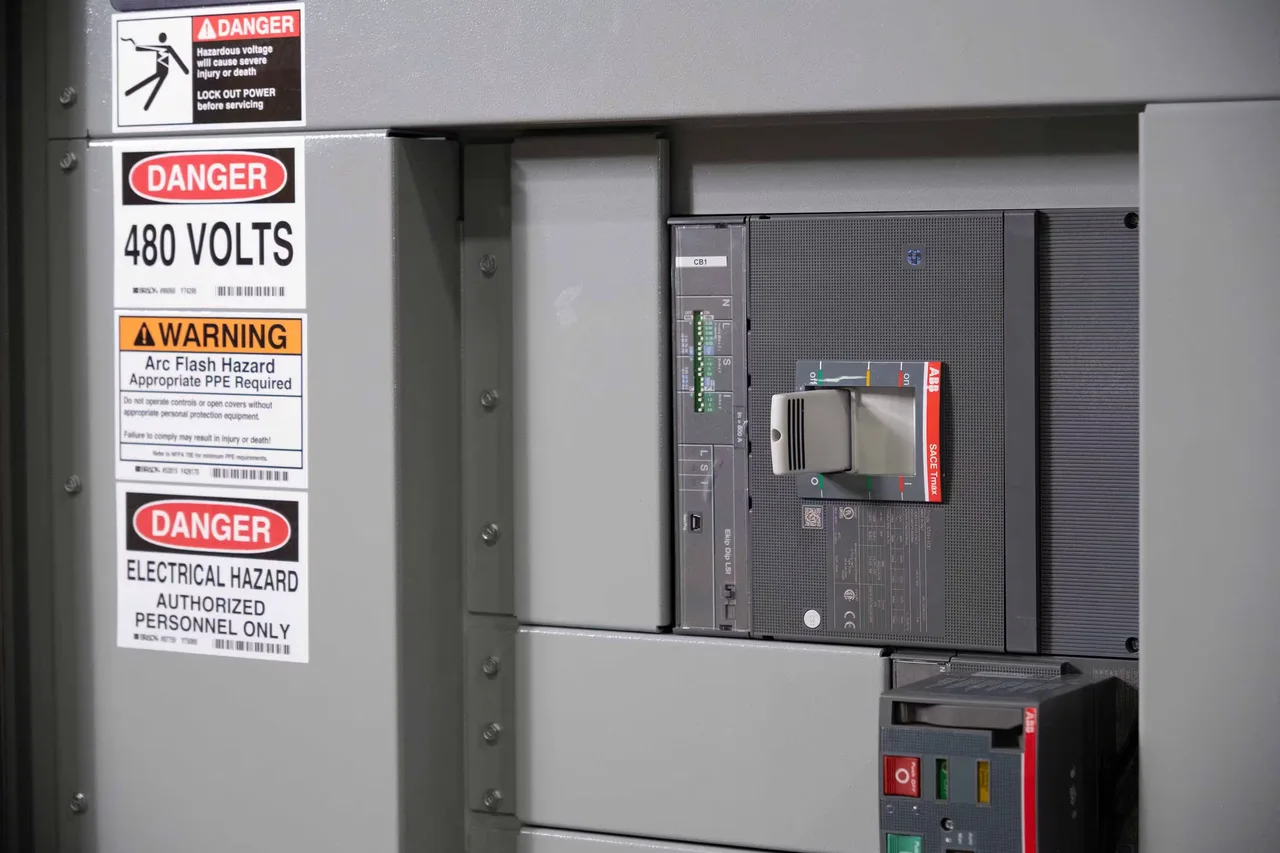
Switchboards can handle the power loads that panelboards can't. If your facility needs more than 1,200A, a switchboard is the only option. They also offer configuration flexibility, such as modular sections, draw-out breakers, custom bus arrangements, and integrated metering or monitoring. Switchboards are also easier to maintain, troubleshoot, and scale, because they’re accessible from both the front and rear.
If you're building a data center, powering an industrial plant, or serving as the main distribution point for a large facility, you will need a switchboard.
Key differences between panelboards and switchboards
Decision criteria for panelboard vs switchboard selection
Which do you need for your application, a panelboard or a switchboard? Follow these seven steps to specify an electric switchboard or panelboard for your facility.
1. Calculate your amperage requirements.
You need to start with your amperage requirements, because this is your hard ceiling. Work with an electrical engineer or contractor to calculate your facility's total connected load at peak demand. Include lighting, HVAC systems, IT infrastructure, equipment and machinery, motors, and any future planned additions. If your total load is under 1,200A, a panelboard is an option. If you're at 1,200A or higher, you can stop here: you need a switchboard.
2. Assess your available space.
Do you have wall space or floor space? Panelboards mount to walls and only need front clearance, meaning they have a pretty minimal footprint. Switchboards are freestanding and floor-mounted. They require 3 feet of clearance in front and rear access, which means they take up more floor space. If you're in a tight mechanical room or a leased building where every square foot counts, a panelboard makes sense. If you have a dedicated electrical room with floor space to spare, a switchboard is viable.
3. Determine your access requirements.
Can you work from the front only, or do you need rear access? Panelboards are front-access only, with limited space for large conductors. Switchboards offer front and rear access, which is essential for large conductor terminations, complex wiring, and thorough maintenance.
4. Factor in budget constraints.
Panelboards have lower upfront costs in both equipment and installation. But undersizing now means costly replacement later. Switchboards cost more upfront, but that investment is justified by their capacity, capability, and future flexibility. If you're budget-sensitive and your loads are definitively under 1,200A, a panelboard makes sense. But if you can't afford to rip out and replace equipment in two to three years, invest in the right-sized switchboard now.
5. Plan for future expansion.
Panelboards max out at 1,200A. Expansion means adding another panel elsewhere or replacing the whole setup with a switchboard. Switchboards, on the other hand, are modular. You can add sections as your facility grows and plan for phased equipment additions. If your facility is static with no growth plans, a panelboard is sufficient. If you're expanding or adding equipment in phases, a switchboard gives you the room to scale without starting over.
6. Check industry-specific requirements.
Lastly, consider your industry’s standards and needs. Data centers need redundancy, high capacity, and advanced monitoring, meaning if you operate a data center, you’ll need a switchboard. The same goes for hospitals and most industrial facilities. Small commercial buildings with standard loads under 1,200A can use panelboards. Know your industry's requirements and spec accordingly.
Panelboard vs switchboard: Making the right choice for your project
After reading this post, you can easily see the difference between panelboards and switchboards. Panelboards are wall-mounted, handle up to 1,200A, and work for residential and light commercial applications. Switchboards are freestanding, handle 1,200A to 5,000A+, and are built for data centers and other facilities that need higher capacity or can't afford downtime.
Giga Energy builds custom UL 891 low-voltage switchboards in our Long Beach, CA location with industry-leading turnaround times. Our switchboards handle up to 5,000A at 480V and integrate seamlessly with our transformers, modular data centers, and site development services. When you work with Giga, you get one partner from spec to site.
Build a quote or contact our team today to discuss your project and see how we can help.
.avif?w=1280)