Data centers, hospitals, manufacturing facilities, and commercial buildings all depend on electrical systems that work when they're supposed to and fail safely when something goes wrong.
But there's a lot of confusion around electrical distribution standards. What's the difference between a switchboard and a panel board? Why does UL 891 matter? How do you know if you need UL 891 or UL 1558 switchgear?
This post breaks down UL 891 switchboards in plain language. We'll cover what they are, what the standard requires, why certification matters for safety and compliance, and how UL 891 switchboards compare to panel boards and industrial switchgear.
Looking for a quote on a UL 891 switchboard? Get yours here.
Understanding UL 891: Safety standards for low-voltage switchboards
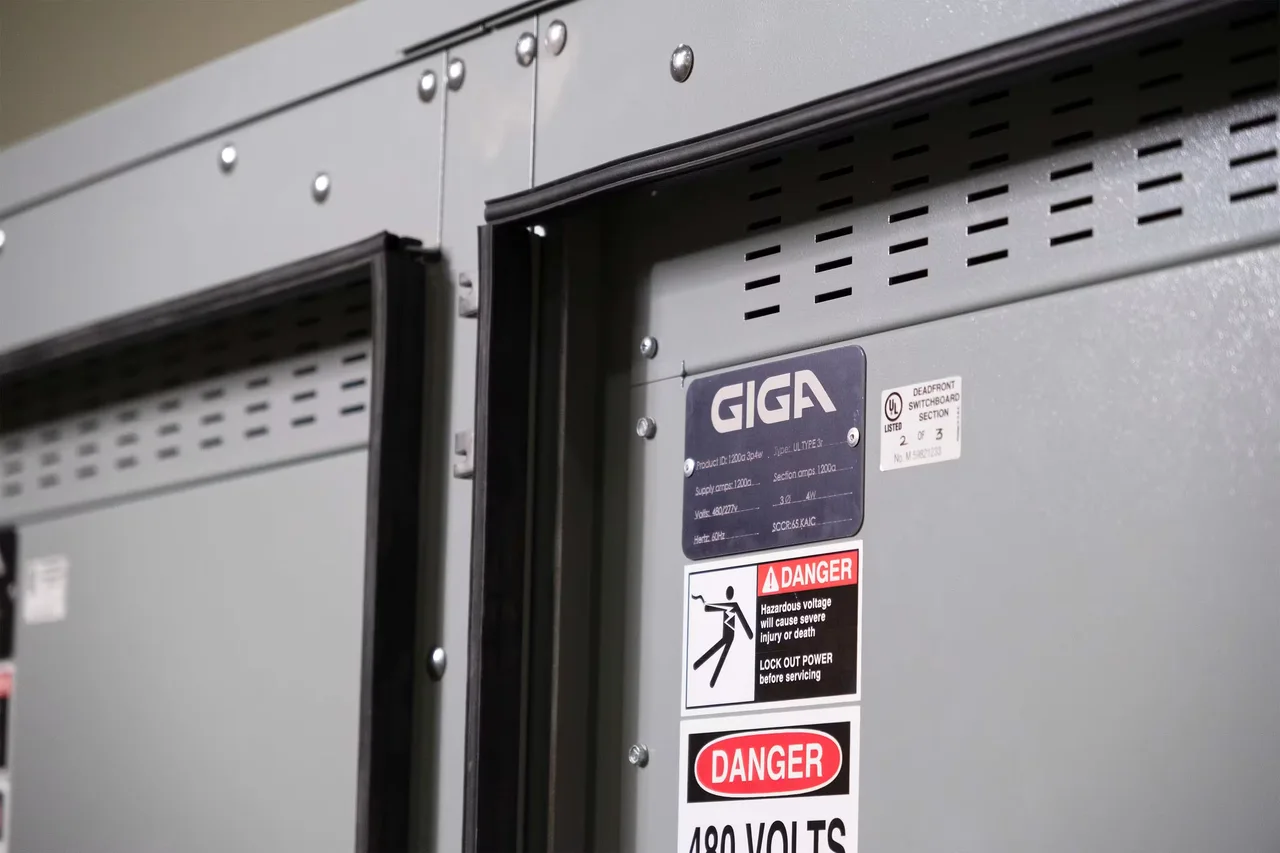
UL 891 is the North American standard for low-voltage switchboards. The "UL" comes from Underwriters Laboratories, an independent safety certification body that tests electrical equipment. The "891" is the specific standard that covers dead-front switchboards rated at 1000 volts AC or less.
Dead-front refers to switchboards with no exposed live parts on the front of the equipment. Live-front equipment is not covered under UL 891.
UL 891 is built to work alongside the National Electrical Code (NEC/NFPA 70) in the US, the Canadian Electrical Code Part I, and other regional codes. It's the common language that engineers, contractors, and inspectors use to verify that switchboards meet minimum safety and performance requirements.
A switchboard is tested for thermal performance under load, short-circuit withstand capacity, and exposure to various environmental conditions before earning UL 891 certification. The goal is to prove the equipment can handle real-world stress without safety issues.
What is a switchboard, and what does it do?
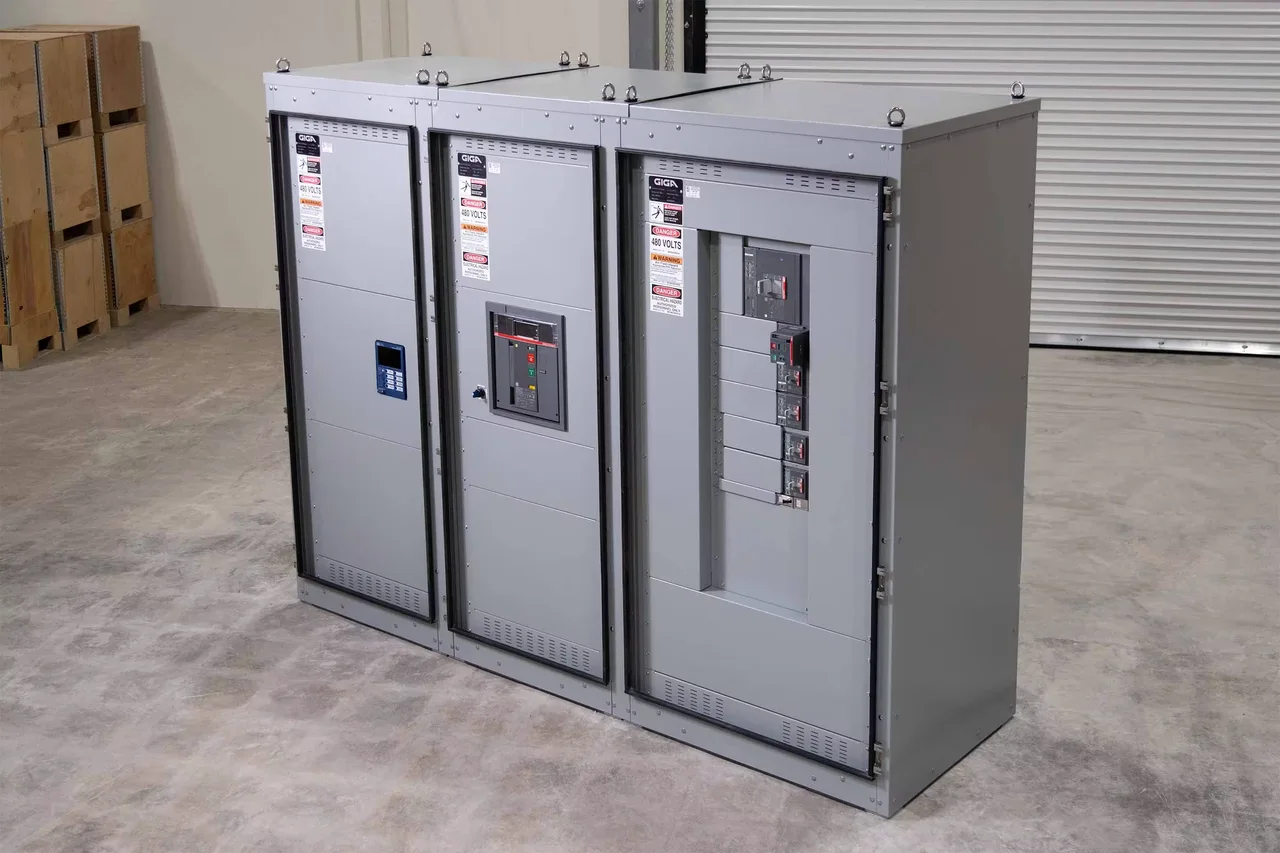
Before we dive deeper into UL 891 switchboards, let’s pause to discuss a switchboard’s core functions. A low-voltage electrical switchboard controls how electricity flows from your transformer into the rest of your downstream equipment.
The switchboard has two critical jobs.
- First, protecting people by serving as a shut-off point for power.
- Second, it protects your downstream equipment. When something goes wrong, the switchboard isolates the fault and protects the rest of the system from damage.
One way to think of your switchboard is as the part of your low-voltage electrical system designed to take the hit. If there's an electrical fault, the switchboard is built to fail safely so your expensive downstream equipment stays intact.
Key components and construction requirements under UL 891
UL 891 switchboards are built around a few critical components. Let’s explore each one and discuss why it matters.
Main breaker
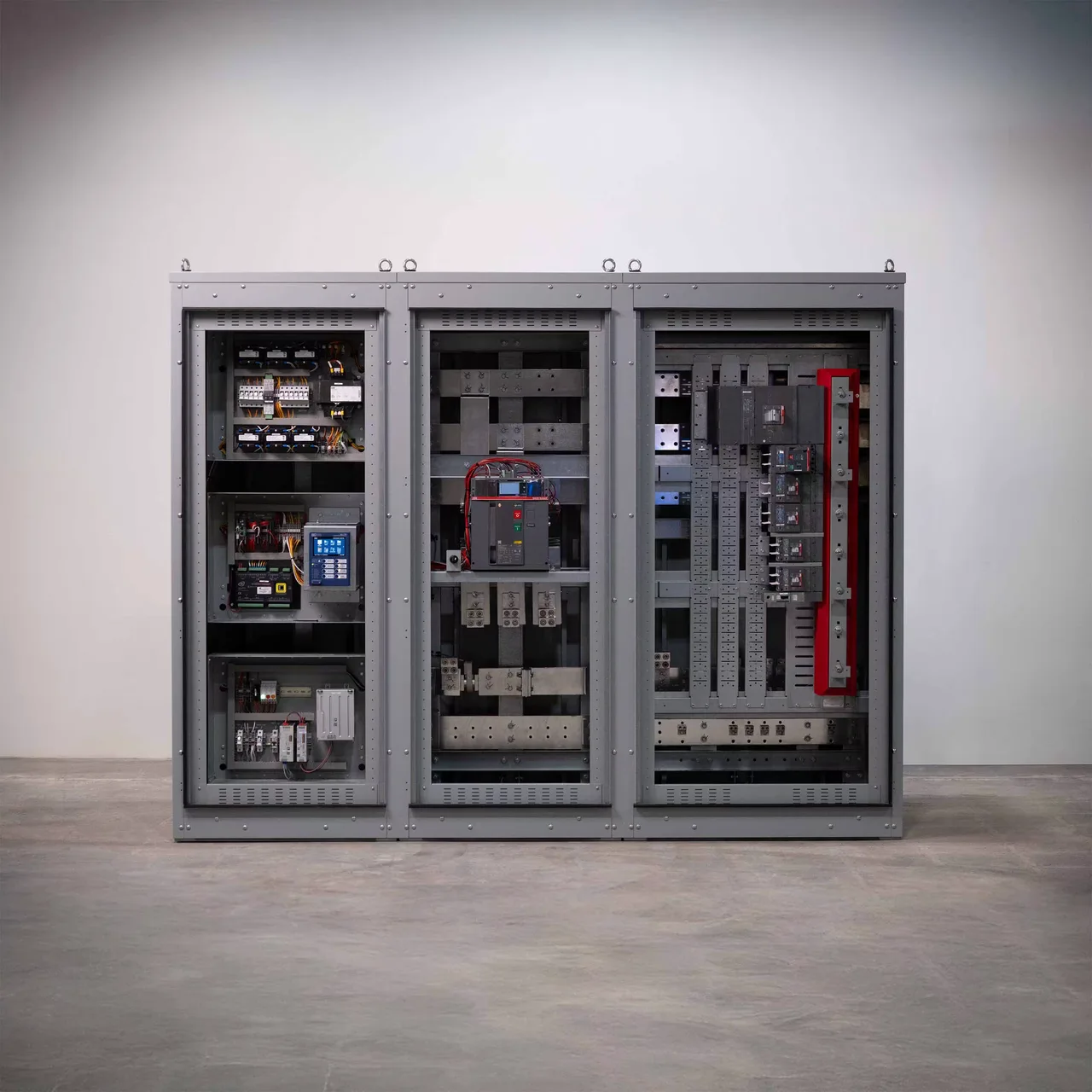
Your main breaker is your service-entrance-rated overcurrent protection device. This is the single-point shutoff for your entire system and can cut power to everything downstream when you need to shut down or when a fault requires isolation.
Feeder breakers
Feeder breakers are the downstream circuit breakers protecting individual loads. Your main breaker feeds the through-bus, and your feeder breakers tap off that bus to supply power to specific equipment, panels, or circuits.
Busbar systems
The through-bus is the main horizontal bus that runs across the switchboard lineup. Power flows through this bus, and feeder breakers connect to it. The through-bus is typically mounted at the top of the cabinet, though it can be positioned in the middle or bottom depending on the design. Unlike UL 1558 switchgear, which requires insulated busbars, UL 891 allows non-insulated busbars with smaller clearances.
Enclosure requirements
Switchboard enclosures must meet specific standards:
- NEMA 1: Indoor-rated enclosures.
- NEMA 3R: Outdoor-rated enclosures designed to withstand extreme weather conditions.
- Cabinet sizing: Minimum dimensions are typically 32" wide x 32" deep x 72-84" tall.
- Dead-front construction: No exposed live parts on the operating side of the switchboard.
Mounting configuration
UL 891 switchboards are typically free-standing units with feet that rest on the floor. You can technically wall-mount a UL 891 switchboard, but it is uncommon to do so.
Wire bending space
UL 891 standards specify minimum wire bending space around breaker terminals to ensure conductors can be safely terminated without damage or excessive stress. Inadequate bending space creates installation problems, safety risks, and potential code violations.
Related read: Five Ways Sourcing Switchboards Is Broken
UL 891 switchboards vs. UL 67 panelboards: Understanding the difference
The gray area where switchboards and panel boards overlap can make the distinction between them confusing. Both can distribute power at low voltage. Both use circuit breakers. The difference comes down to construction requirements, physical size, and application.
UL 891 switchboards have a minimum bus rating of 800 amps and can reach 6000 amps. UL 67 panel boards max out at 1200 amps. If your project needs more than 1200 amps, you're automatically in switchboard territory.
UL 891 switchboards require larger enclosures due to the wire bending space requirements we discussed in the last section. Panel boards are more compact because they are not required to meet these same standards.
As we’ve already discussed, switchboards are typically free-standing, while panel boards are typically wall-mounted, which is another key difference between the two.
Switchboards are typically used for service entrance and main distribution in larger facilities. They're often the first point of disconnect after your transformer and the equipment that feeds everything else downstream.
Panelboards can also serve as service entrance equipment for smaller applications, such as retail or restaurant locations, where the total building load doesn't require a full switchboard. In larger installations, panel boards are fed from a switchboard or another upstream source and distribute power to smaller loads.
So, which do you need? If you need more than 1200 amps, you're looking at a UL 891 switchboard. If you're under 1200 amps and feeding branch circuits, a UL 67 panel board will do the job.
UL 891 vs. UL 1558 switchgear: Critical differences for industrial applications
Both UL 891 and UL 1558 cover low-voltage equipment rated at 1000 volts or less, but they're built for different environments. UL 1558 is heavy-duty equipment designed for industrial facilities and critical infrastructure. UL 891 is for switchboards used in commercial and light industrial applications.
UL 1558 requires individually compartmentalized draw-out breakers. UL 891 doesn't mandate compartmentalization, and breakers are typically group-mounted in sections without physical barriers between them.
Another key difference concerns busbar requirements. UL 1558 mandates insulated busbars with greater clearances between phases and between bus and ground. UL 891 allows non-insulated busbars with smaller clearances.
UL 891 and UL 1558 also use different breaker types. UL1558 uses UL1066 breakers for all mains/feeders in the switchgear. UL891 typically uses UL1066 for mains and UL489 for feeders.
Other critical differences between these two types of switchgear:
- Fault current ratings: UL 1558 switchgear has higher fault current withstand ratings, often with 30-cycle short-time ratings. UL 891 switchboards typically have 3-cycle withstand ratings.
- Arc flash protection: UL 1558's compartmentalized design and insulated busbars inherently reduce arc flash risk. UL 891 doesn’t require arc flash protection measures.
- Cost: UL 1558 switchgear costs significantly more than UL 891 switchboards.
If you're running an industrial facility with heavy control schemes, such as pilot lights, toggle switches, position indicators, and integrated automation, you'll likely need UL 1558. But for many commercial, data center, and bitcoin mining applications, UL 891 switchboards rated up to 100 kAIC deliver the performance you need at a fraction of the cost.
Why UL 891 certification matters
Why should you care whether a switchboard is UL 891 certified? Often, a certified switchboard is required for code compliance and operator safety. Without UL certification, your project won’t pass inspection. Inspectors look for UL listings during permitting and finals. No listing means you're stuck with equipment you can't legally use.
UL 891 testing verifies that your switchboard is capable of doing its job and protecting your downstream equipment. Proper overcurrent protection is the difference between replacing a $10,000 breaker and writing off $500,000 in servers or machinery.
Finally, UL certification is third-party proof that the switchboard was designed right, built with quality materials, and tested under actual fault conditions. Engineers specify UL 891-certified switchboards because they know it meets code, protects their team, and won't come back to haunt them.
What to specify when ordering a UL 891 switchboard
Use this simple checklist to help your team specify the right switchboard.
Minimum required information:
☐ System voltage: 480V, 600V, or other
☐ Wiring configuration: 3-phase 4-wire (with neutral) or 3-phase 3-wire (no neutral)
☐ Main bus amperage: 1200A, 2000A, 2500A, 4000A, etc.
☐ Number of feeder breakers
☐ Feeder breaker amp ratings
☐ Indoor or outdoor
Additional specifications:
☐ Interrupting rating (KAIC)
☐ Breaker manufacturer preference
☐ Service entrance location: Top, bottom, or side entry
☐ Add-on features: Power metering, surge protection, CT/VT, ground fault detection, HMI displays
☐ Special application requirements: K-factor loads, harmonic considerations, generator tie-in provisions
The best practice to follow when specifying a switchboard is to provide single-line diagrams, written specifications, and application details upfront. If you have drawings, send them. If you've worked with an engineer, share their notes. The more information we have at the quoting stage, the more accurate your price and timeline will be.
Choosing the right UL 891 switchboard for your project
UL 891 defines the testing, materials, and design requirements that ensure your low-voltage switchboard is capable of protecting your team, meets all required codes, and performs as expected under real-world conditions.
At Giga Energy, we manufacture UL 891 switchboards with short lead times and customization options like surge protection, power metering, ground fault detection, and breaker flexibility, all without adding lead time.
Our switchboards are built in California, engineered by people who understand your application, and backed by responsive support from quote to commissioning.
Ready to move forward? Get in touch with our team or build a quote online now.
.avif)
.avif?w=1280)