Choosing a transformer can be overwhelming. There are so many variables and specs, and when you’re working with a vendor who speaks mostly in jargon, you can end up wondering whether you’ve sized correctly or spec’d the correct voltage.
The worst part is that getting it wrong has some steep consequences. Best-case scenario, you’ll end up with project delays that blow your planned energization date. Worst-case scenario, you’ll have equipment failures that take your operation offline and result in safety risks. Either way, you’re dealing with lost revenue and a budget disaster.
It doesn't have to be this way.
This guide walks you through seven practical steps to select the proper electrical transformer with confidence. We’ll cover every step from calculating load requirements to evaluating the total cost of ownership.
.avif)
Understanding transformer basics
What is a transformer, and what does it do? The textbook answer is that transformers convert voltage from one level to another. In practice, a transformer is the backbone of operations like data centers, manufacturing facilities, and bitcoin mining sites.
Before you can select the right transformer for your project, you need to understand a few core concepts and terms:
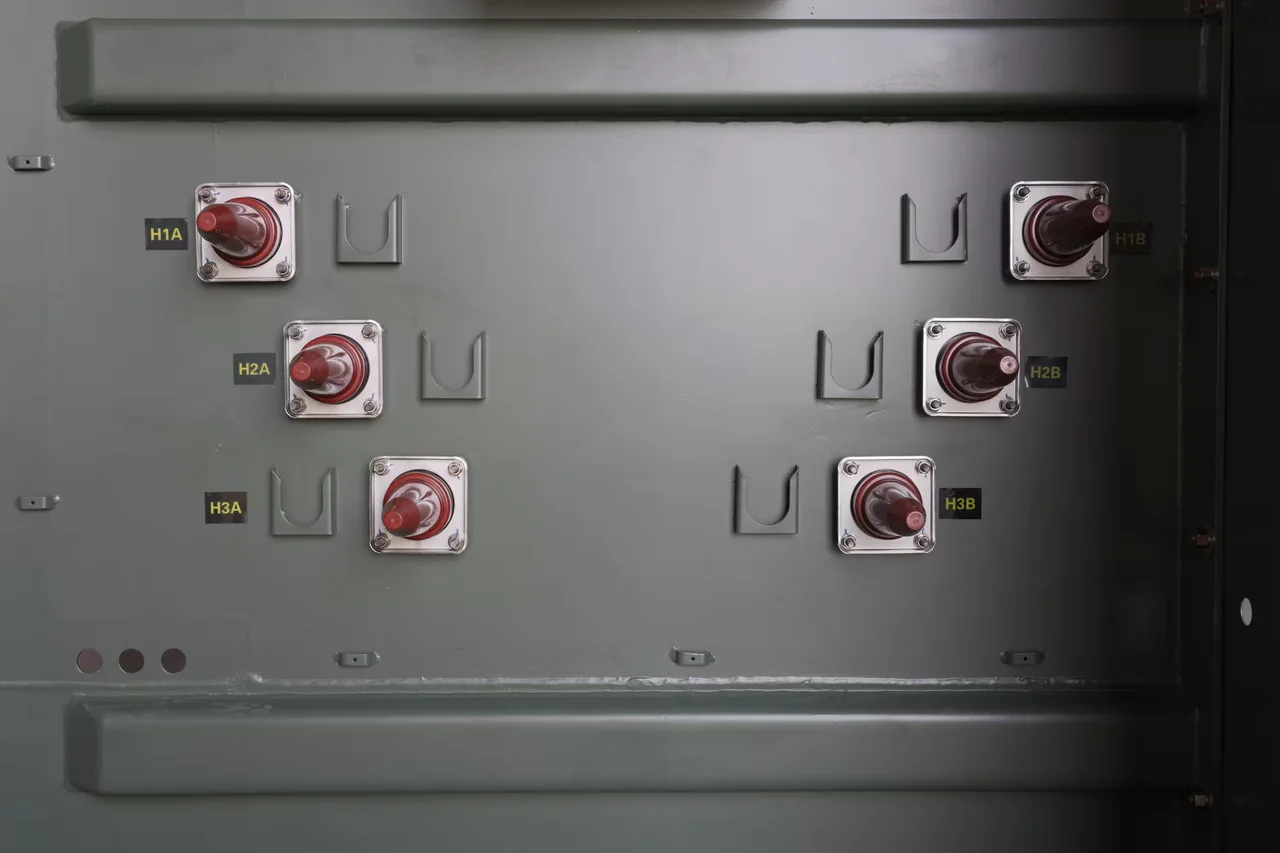
- Primary vs. secondary voltage: Primary voltage is your input voltage and is supplied by your utility (typically 12.47kV or 13.8kV). Secondary voltage is what your equipment actually needs (typically 208V to 600V).
- kVA ratings: These ratings measure the apparent power. The kVA rating of a transformer is representative of the total power that appears in the system in volt-amperes.
- Single-phase vs. three-phase: Single-phase transformers work well for lighter commercial or residential loads. Three-phase transformers are built for industrial facilities with heavy equipment and higher power demands.
- Cooling classes: You’ll see cooling classes like ONAN, ONAF, KNAN, and KNAF. These define how the transformer dissipates heat.
Choosing the wrong transformer can lead to delays, equipment failures, safety risks, and regulatory headaches. The right one keeps your project on schedule and your team confident in what you've built.
Now that we’ve established the basics and key terminology, let’s walk through the step-by-step process you should follow to choose the right fit for your build.
Step 1: Determine your load requirements
When choosing the correct transformer for your project, start with the numbers. Calculate your total power demand. You’ll find this number by summing the power draw of all equipment, including lighting, HVAC, machinery, servers, and cooling systems.
For single-phase loads, multiply voltage (in volts) by current (in amps) and divide by 1,000. For three-phase, multiply voltage by current by 1.732, then divide by 1,000, converting to kVA.
The initial calculations are straightforward, but this is still a step where many people falter. The number one mistake we see at this stage is sizing for today’s load and forgetting about tomorrow’s. The best practice when sizing a transformer is to design for growth. You’ll want to size your transformer larger than the load you currently have. You must also consider the power factor of the load.
Operating a transformer at 80% of its rated capacity is best practice for most operations. Leaving extra headroom prevents overheating, reduces stress on components, and extends the unit's lifespan. Running at full capacity constantly wears the transformer down. If you size your transformer to your exact needs without allowing any margin, you’ll face premature failure and emergency replacements when you can least afford them.
Load type matters too. Linear loads, such as resistive heaters, are straightforward. Nonlinear loads, such as data centers with rectifiers, variable-frequency drives, or bitcoin mining equipment, introduce harmonics that generate additional heat. If your load has significant harmonic distortion, you'll need a K-factor-rated transformer.
Step 2: Identify your voltage and frequency requirements
Next, you’ll need to identify your voltage and frequency requirements. Start by calling your utility and confirming your primary voltage. Voltages vary by region and service class, and getting this detail wrong could derail your entire project before you break ground, so you’ll want to double-check.
Your secondary voltage is what your equipment runs on. Check nameplates, instruction manuals, or spec sheets for every major load.
Frequency matters more than people think. North America runs on 60Hz. Much of the rest of the world uses 50Hz. If you spec the wrong frequency, your transformer won't perform as designed and, ultimately, the unit will age far faster than it should.
Step 3: Choose the right transformer type and construction
Not all transformers were built for the same job. You need to consider what you're powering and where you’re installing it when choosing the right type of transformer for your application.
First and foremost, you need to consider your overall build needs. Your use case will determine whether you need a padmount or substation transformer:
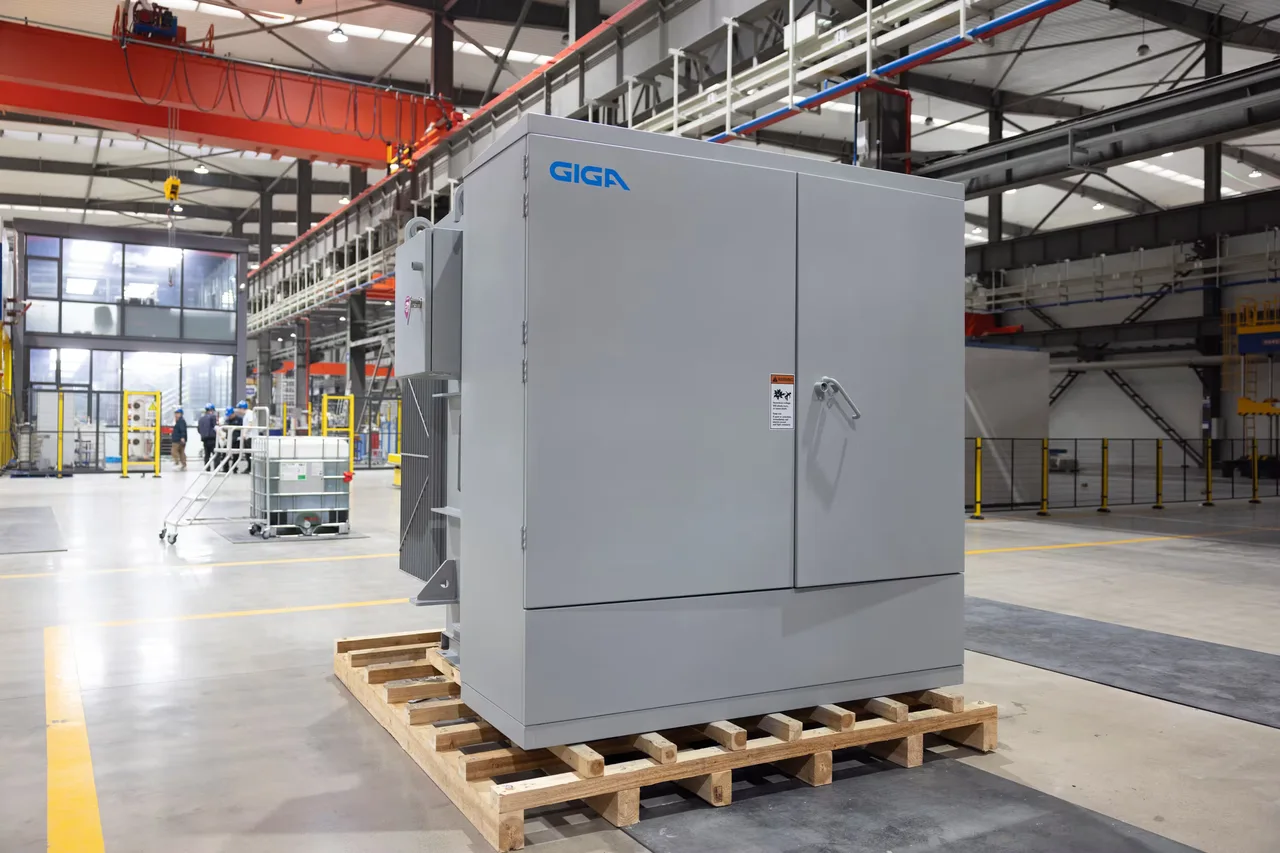
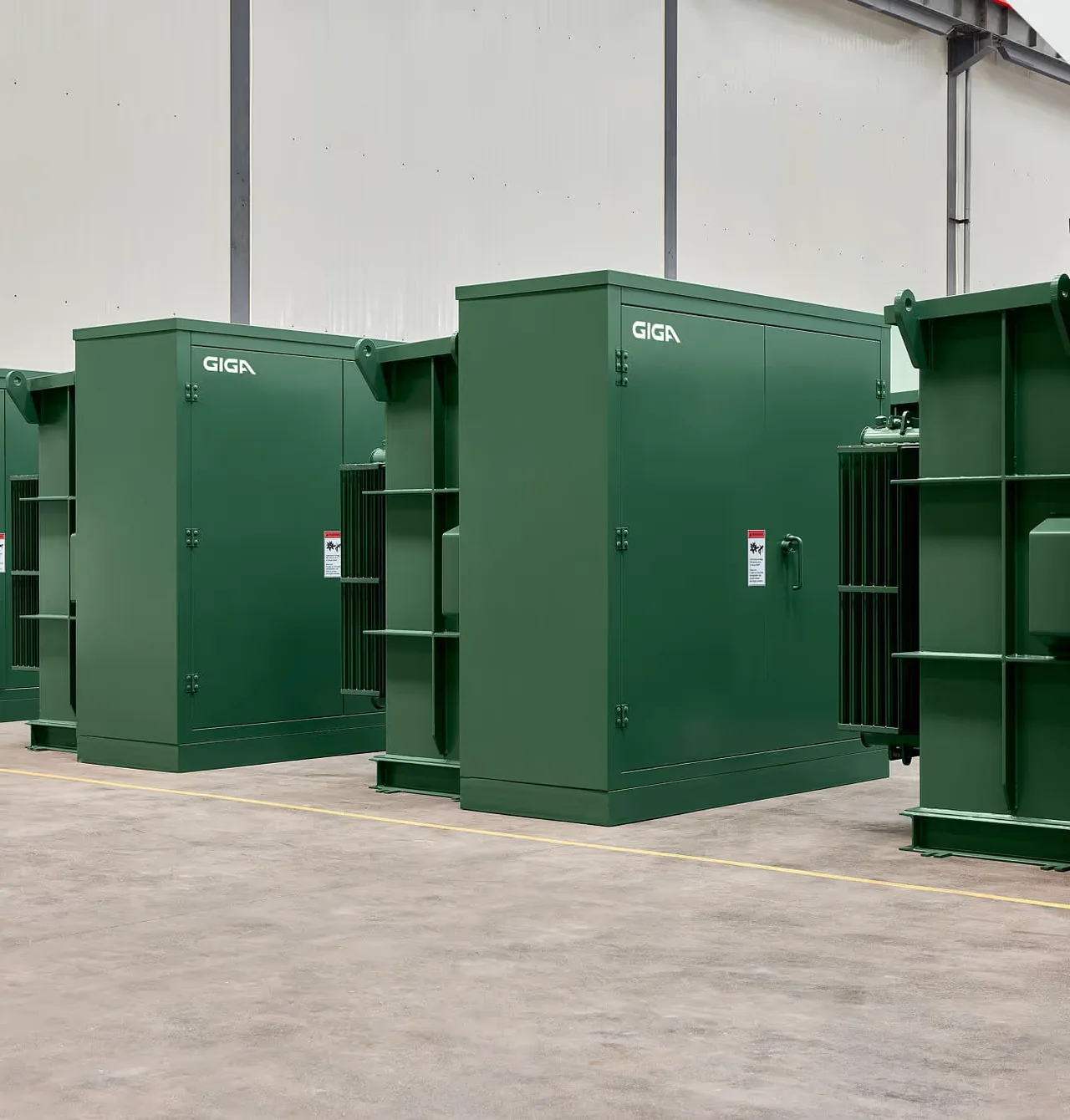
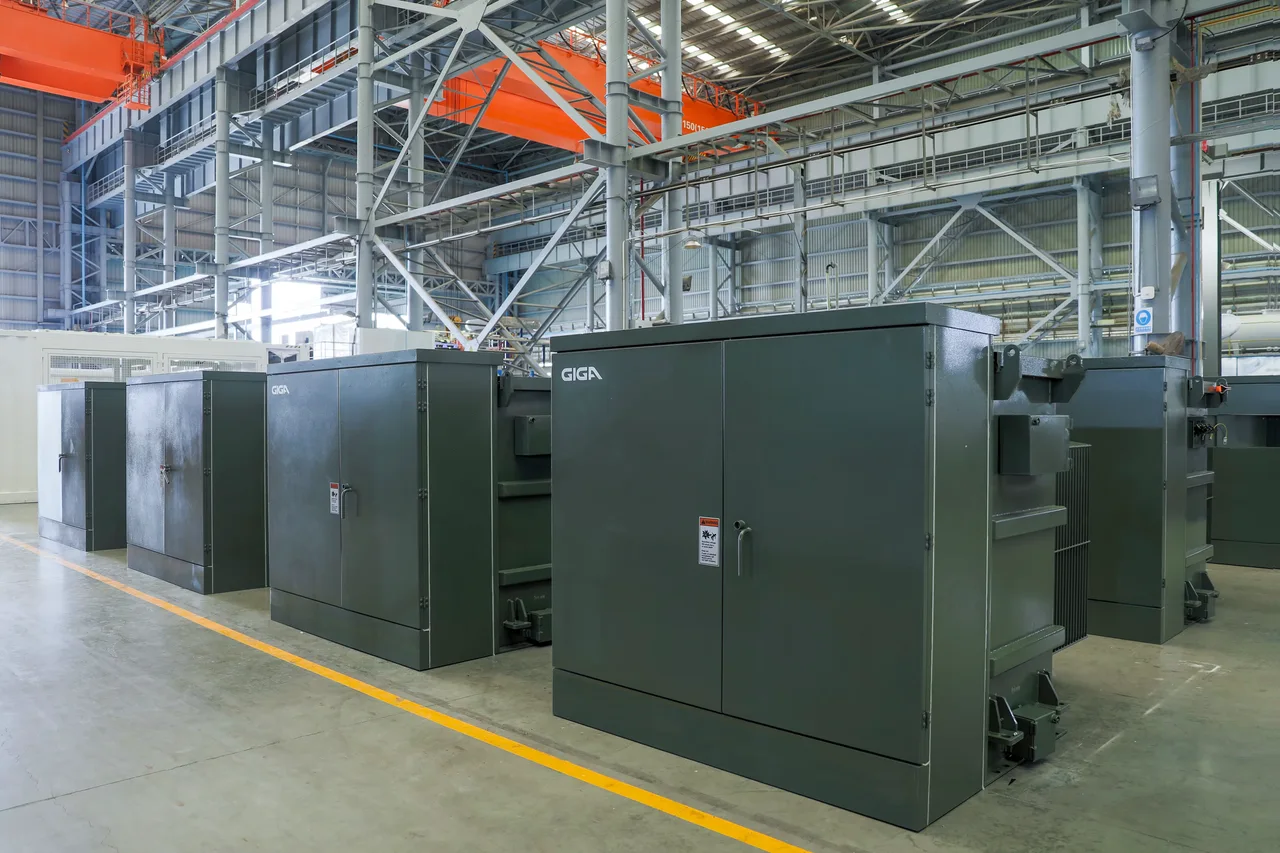
- Padmount transformers provide underground or throated power distribution for commercial and industrial loads. Giga offers these from 15 kVA up to 10,000 kVA with voltages up to 34.5 kV (or up to 46kV for our high-voltage transformers).
- Substation transformers handle high-voltage and medium-voltage distribution for utilities and large industrial complexes. Our liquid-filled three-phase units range from 5kV to 138kV with capacity up to 100 MVA.
Read more: Fusing options for padmount transformers
You’ll also need to decide whether you need a single-phase or three-phase transformer. Single-phase transformers are well-suited for lighter commercial or residential loads, whereas three-phase transformers are designed for industrial facilities and data centers.
Once you’ve got your sizing right, you’ll need to consider whether a dry-type or an oil-filled transformer is appropriate for your application.
- Dry-type transformers use air for cooling. They're safer for indoor use, require less maintenance, and run cleaner without oil containment concerns. These are usually spec’d for commercial buildings and hospitals, or anywhere else fire safety codes require less-flammable equipment.
- Oil-filled transformers deliver higher efficiency and better cooling, making them ideal for outdoor installations and heavy-duty applications. They handle larger loads and harsher environments but require containment measures for potential leaks and regular maintenance.
Next, consider your transformer cooling method. Cooling classes define how the transformer manages heat. ONAN and KNAN use natural convection with mineral oil or high-fire-point fluids. ONAF and KNAF add forced-air cooling with fans, increasing capacity during load spikes. Match your transformer’s cooling class to your application’s needs.
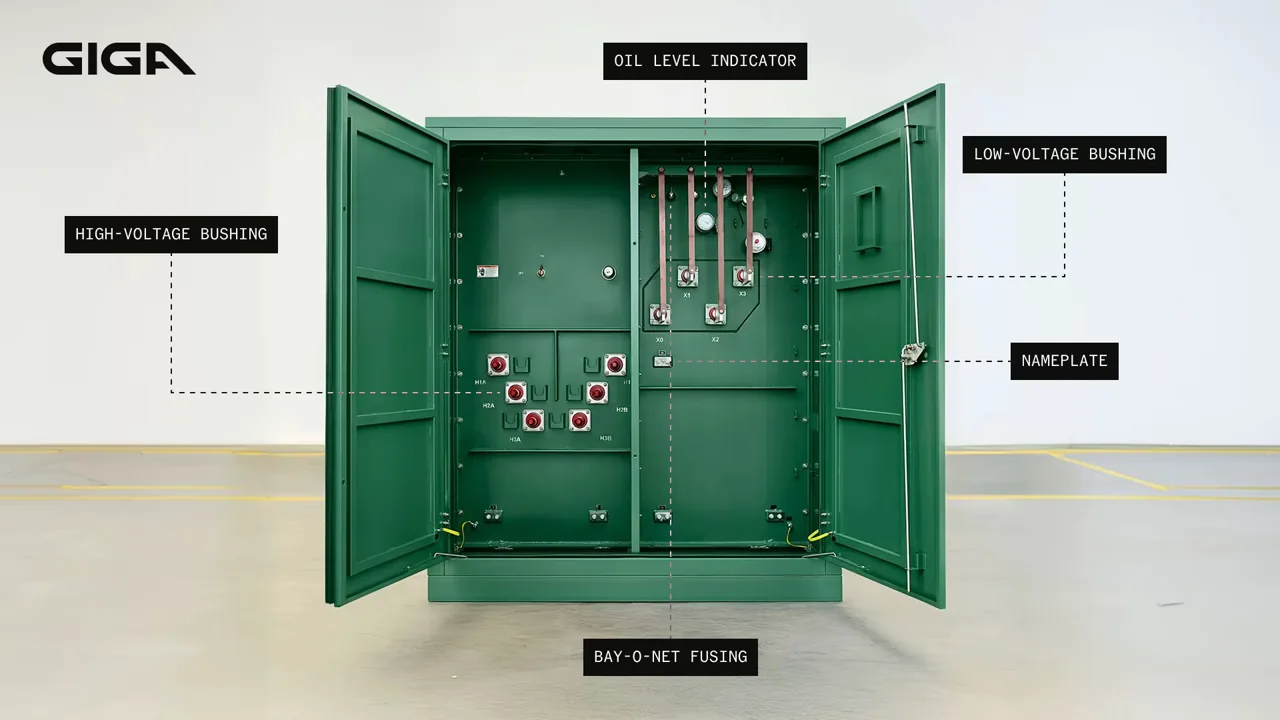
Step 4: Factor in environmental and installation conditions
When choosing the proper transformer for your project, you’ll also need to remember to factor in environmental and installation conditions. Environmental conditions impact the performance, lifespan, and safety of your installation.
Start by considering your environment. How hot is the air temperature where you intend to install your transformer? Transformers are typically rated for 30°C daily average ambient conditions. If your facility runs hotter than that, you'll need a larger unit or additional cooling to prevent overheating. A 10°C increase above the rated temperature can halve the transformer's lifespan.
You also need to factor in altitude and humidity. Higher altitudes reduce air density, which impacts heat dissipation, and high-humidity environments require additional corrosion protection and sealing to protect the units over time.
Your next consideration hinges on whether you're installing indoors or outdoors. Outdoor units need weatherproof enclosures to protect against rain, snow, and temperature extremes. On the other hand, indoor setups need to manage noise, especially if your transformer is near office spaces or control rooms. Factor these differences into your selection process.
Review space constraints and mounting configurations. Tight equipment rooms need compact designs. Some applications require wall mounting, others need floor mounting, or custom skid configurations.
Step 5: Specify quality standards and technical requirements
The materials, standards, and testing that go into your transformer determine whether it runs reliably for decades or fails when you need it most. When specifying a transformer for your next project, you’ll want to give careful consideration to the materials used in its construction.
A few construction materials to keep a close eye on:
- Core material: Your transformer’s core affects efficiency and heat management. Cold-rolled grain-oriented silicon steel is standard and delivers solid performance. Amorphous steel cores are more efficient, but more expensive.
- Conductor material: You have two options for conductor material: copper or aluminum. Copper windings provide superior conductivity and efficiency. Aluminum costs less upfront but increases losses.
- Insulation class: Your insulation’s classification defines temperature tolerance. Classes A, B, F, and H support progressively higher operating temperatures.
Read more: Transformer cores and coils: A comprehensive guide
Saving money upfront when it comes to your transformer’s materials can end up costing you more in the long run, depending on your use case. Cheaper materials fail faster, and you may end up paying more in maintenance, unplanned outages, and early replacements.
You also want to ensure your transformer meets all safety and performance requirements. Entities such as Underwriters Laboratories (UL), the National Electrical Manufacturers Association (NEMA), the Institute of Electrical and Electronics Engineers (IEEE), and the American National Standards Institute (ANSI) set standards to help you verify that your transformer meets safety and regulatory approval requirements.
Finally, testing requirements validate what you're buying. Efficiency testing, impulse withstand testing, and resistance testing confirm that the transformer performs as specified. Any manufacturer worth working with backs their units with comprehensive test data.
Giga's approach combines rigorous quality assurance with American engineering and a global supply chain. We implement strict quality control at every production stage to ensure our transformers meet or exceed industry standards.
Step 6: Consider lead times and supply chain realities
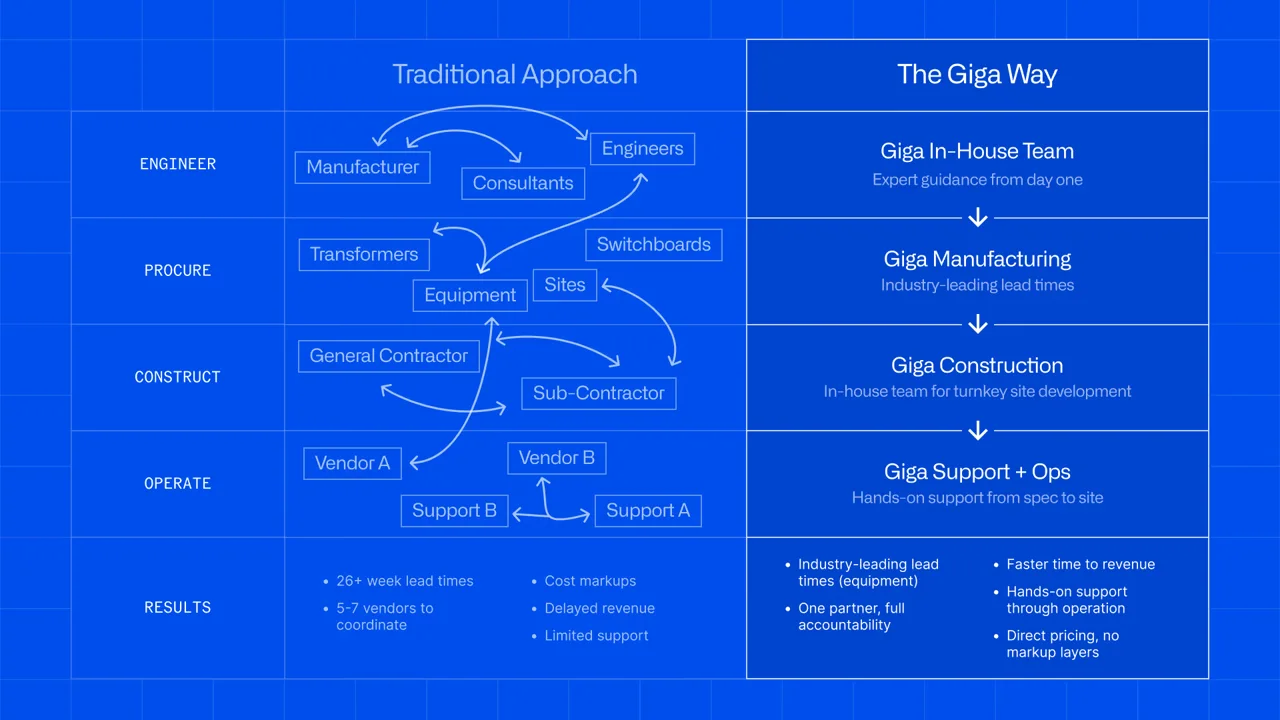
Lead times can kill a project. When you've lined up financing, coordinated contractors, and set energization dates, the last thing you want is to find out your transformer won’t arrive for another six months. Unfortunately, that's the reality with most manufacturers today.
Industry averages are brutal right now. Many legacy manufacturers quote six to twelve months or longer for transformers. Some are even worse. These long transformer lead times and poor customer service are still tolerated because many legacy systems in the industry haven’t kept pace with the speed required for modern projects.
One of the most significant indicators of your lead time is whether you need a custom transformer or if a standard spec build will work for your project. Standard units built to common specifications ship faster, whereas custom designs require specialized engineering and production, which can add weeks or months to a project.
Giga can cut legacy manufacturer lead times in half because we control our supply chain from drawings through delivery. We have full control over our supply chain, so we're not waiting on someone else's transformer shop or another vendor's lead time. If you need to get your site energized quickly, get in touch with our team.
Step 7: Evaluate total cost of ownership
Initial capital cost is just the entry fee. When selecting the right transformer for your project and budget, you need to consider the total cost of ownership, which factors in everything that happens after you write the check.
First, consider energy efficiency. A transformer’s efficiency affects operating costs over its service life. A more efficient transformer with better core material and copper windings reduces losses, generates less heat, and lowers your energy bill month after month. Over twenty years, that adds up.
Next, consider maintenance requirements. Poorly built transformers will be cheaper upfront, but will nickel-and-dime you with repairs, inspections, and parts that shouldn't fail. You must also consider your suppliers' warranty coverage and responsiveness to support requests. You’ll want to partner with a supplier that offers a robust warranty and, equally important, a support team that responds to your maintenance needs if you need to use that warranty coverage.
Working with Giga Energy gives you the best possible total cost of ownership. We own the supply chain, manufacturing, and engineering, so you get faster delivery, fewer delays, and full accountability from spec to site.
How to choose a transformer with confidence
Following these seven steps, you should be able to set yourself up for success when choosing the right transformer. This simple framework has all the considerations you need to avoid the expensive mistakes that derail projects and drain budgets.
But one of the most important considerations when choosing the right transformer is choosing the right partner and supplier.
Partnership matters more than transaction. The right transformer supplier doesn't disappear after installation. They're there when you need engineering support, when timelines shift, and when the next project starts. That's what we do at Giga.
Ready to get started? Build a quote or contact Giga's expert team for expert guidance on your specific project requirements. Let's build what's next together.