Most bitcoin miners think they have a handle on their electricity costs. They’ve negotiated a rate per kilowatt-hour and plugged it into a profitability calculator alongside hash rate, network difficulty, and current bitcoin price. The spreadsheet says they’ll be profitable, so they deploy hardware, sign contracts, and start mining.
But at the end of the first month or quarter, they find out the numbers don’t match up.
The problem isn't the energy rate. The problem is that energy charges are only a portion of what you'll actually pay. Once you add in the unexpected charges and fees, what looked like $0.05/kWh all-in is actually $0.08 to $0.12/kWh. That gap is the difference between profitable mining and operating at a loss.
In this post, we'll break down the real cost of mining a bitcoin and explain how market optimization through platforms like Giga Power Systems can reduce your all-in electricity expenses when it matters most.
Understanding the true cost of mining a bitcoin
The formula most bitcoin miners use to calculate profitability is simple: hash rate divided by network difficulty, multiplied by block reward, minus your cost per kilowatt-hour. At $0.05/kWh, the math might look favorable, but remember that $0.05 is not the whole story.
An easy comparison is to think of your energy charge as the price of gas rather than the total cost of owning and operating a vehicle. When you’re calculating total vehicle costs, you need to factor in insurance and maintenance. In mining, you’ll have additional costs in the form of demand charges, capacity fees, and transmission costs.
These costs don’t show up in the $/kWh rate you negotiated with your utility company, but they will show up on your bottom line. Demand charges and capacity fees are the hidden costs that separate profitable operations from the ones that shut down when prices dip.
Let’s take a closer look at the impact each of these fees has on your overall electricity costs.
Read more: Key considerations when choosing transformers for bitcoin mining
Energy charges: The base rate
Your energy charges are fairly straightforward: if you use electricity, you pay for it. This figure is the kilowatt-hour rate that shows up in your power purchase agreement or utility contract. This figure is based on actual consumption, so if your miners run at full capacity for a month, you’ll pay more than you will if you curtail for a week.
The rate itself can vary depending on how you source power. Wholesale rates are different from retail rates through a municipal utility. Some regions have time-of-use pricing, where energy costs more during peak demand hours and less overnight or on weekends. If you're running a flexible load operation, these variations matter. If you're running 24/7 at constant load, they matter less, since you're buying power around the clock regardless of when it's cheapest.
Bitcoin mining is a constant, high-density load. You're pulling megawatts around the clock, every day, without the load variability that residential or even commercial customers have. Utilities know this and structure their pricing accordingly.
Though these energy charges are the largest single line item on your bill, they’re not the whole story. The rest of your bill is everything your operation demands from the grid beyond raw kilowatt-hours.
Demand charges
Demand charges are where most miners get blindsided. Unlike energy charges, which are based on how much electricity you consume over time, demand charges are based on your peak power draw during a billing period.
If your bitcoin data center draws 5 MW at its peak in a month, you're billed at that 5 MW level. At $10 to $20 per kilowatt of demand, that's $50,000 to $100,000 in demand charges for that month alone, separate from the energy you actually consumed.
Grid infrastructure has to be sized to handle your maximum load, not your average load. If you can pull 5 MW, the utility has to provision 5 MW of capacity, even if you only use that full capacity occasionally. They're charging you for the right to access that peak power when you need it.
Here's why bitcoin miners get hit harder by this approach than almost any other customer class:
- Constant high-density load: Mining operations run at or near full capacity 24/7. Your peak demand is your baseline.
- No natural load variability: Residential and commercial customers have peaks and valleys. Miners don't. There's no baked-in relief, no downtime, no periods of reduced draw that lower your demand charge exposure.
As a result, your demand charges can represent a whopping 30-50% of your overall bill, depending on your utility’s tariff structure. When you add demand charges back into your cost per kilowatt-hour, you're adding $0.02 to $0.04/kWh on top of your base energy rate.
Capacity fees and transmission charges
Capacity fees and transmission charges appear under different names depending on your utility, region, and whether you're operating in an ISO or RTO market structure.
- Capacity fees are reservation costs; you're paying for the grid to hold capacity available for your operation, whether you use it or not.
- Transmission charges cover the cost of delivering power from generation sources through substations, transformers, and distribution lines to your site.
Sometimes these appear as separate line items. Sometimes they're bundled into a single monthly charge or rolled into a per-kilowatt rate. You might see these labeled as "facilities charges," "customer charges," "grid reliability fees," or "network access fees." The name doesn't matter as much as the fact that you're paying them.
These charges can be fixed monthly amounts or calculated based on your contracted capacity or actual peak usage during the billing period. For mining operations, capacity and transmission charges typically add another $0.01 to $0.03 per kilowatt-hour to your all-in cost, depending on your location and utility tariff.
Read more: An all-in-one guide to choosing transformers for crypto mining
Calculating your true mining cost
With these three elements in mind, you can calculate your true cost per kilowatt-hour. To find your full cost, take your total monthly charges across energy, demand, capacity, and transmission, and divide that figure by the kilowatt-hours you consumed that month.
Let's say your energy rate is $0.05/kWh. Your demand charges, when spread across total consumption, add another $0.025/kWh. Capacity and transmission fees add $0.015/kWh.
Added together, your all-in cost is $0.09/kWh; an 80% increase over the rate you probably used to model profitability before you turned on your first miner.
Understanding the real cost of mining a bitcoin is critical because your all-in electricity cost is one of the few variables in mining you can control. You obviously cannot adjust hash rates, difficulty, or bitcoin price, but your electricity cost is a lever you can pull. And at megawatt scale, small reductions add up: if you shave $0.01/kWh off a 10 MW operation, you’ll save over $870,000 a year.
How market optimization reduces the real cost of mining a bitcoin
Market optimization can change the game for bitcoin miners. Instead of treating electricity as a fixed cost, you can treat it as a dynamic resource with fluctuating value.
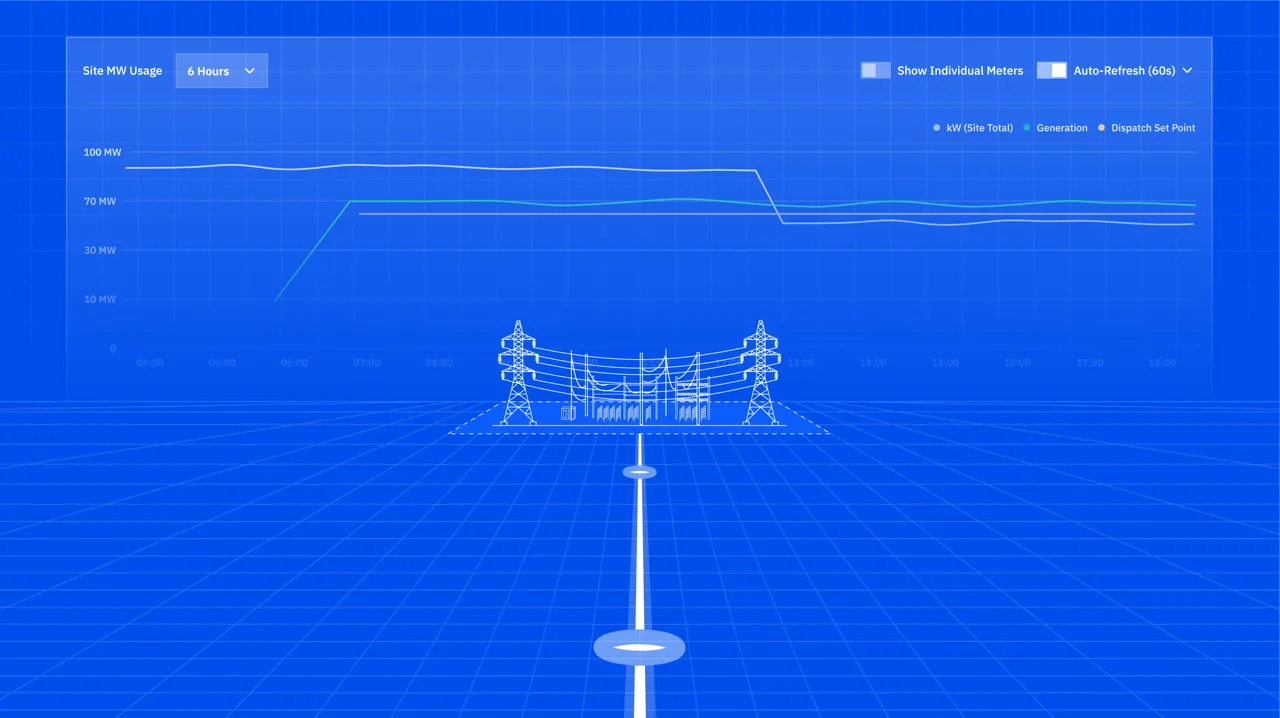
When grid operators need load relief during peak demand or system strain, they will pay customers to curtail. Participating in demand response programs means the grid pays you to reduce load during high-value hours, allowing you to shift mining intensity to lower-cost periods when it makes sense to do so.
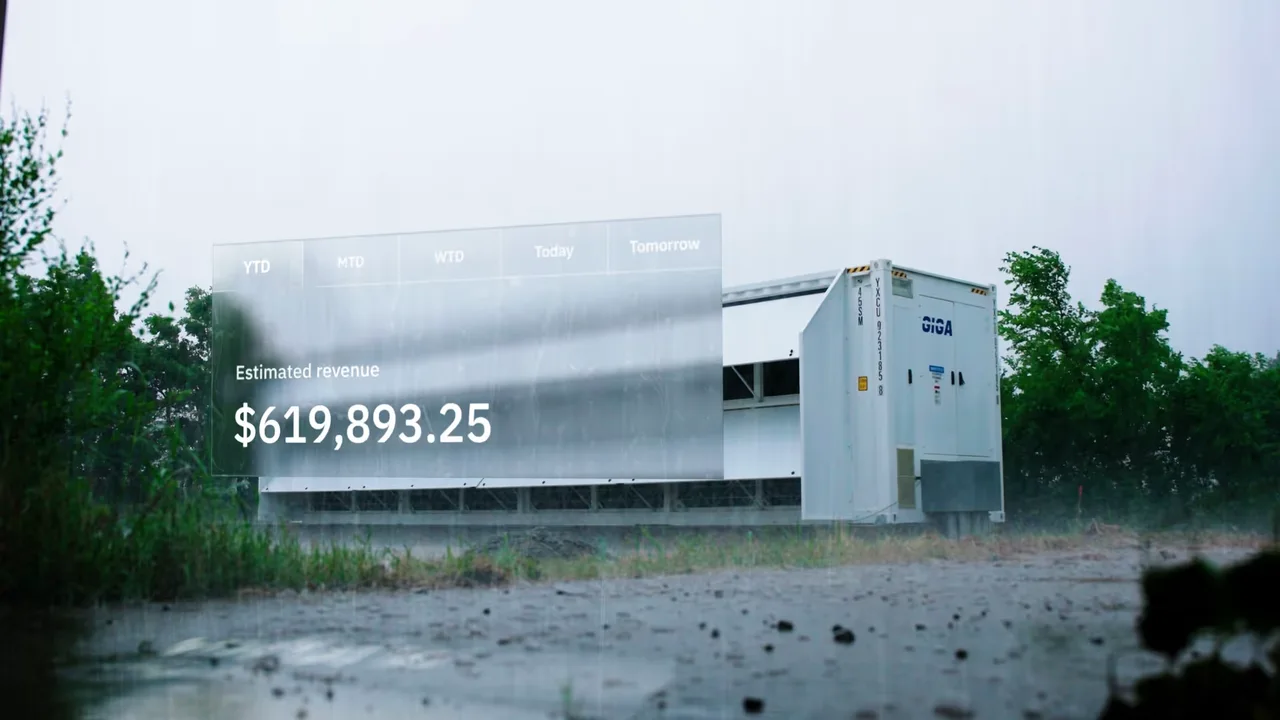
Using this approach, operators can reduce their all-in electricity costs from $0.08-$0.12/kWh to around $0.06-$0.09/kWh. The revenue from grid participation directly offsets demand charges and capacity fees, resulting in an additional $20,000 to $80,000 per MW per year, depending on your region and market structure.
If you want to maximize your revenue and cost savings, you need the right demand response partner. Generic demand response programs offer set-it-and-forget-it platforms that don’t work well for flexible load sites. Instead, you want to work with a partner like Giga Power Systems. We optimize daily, using real-time price signals to decide when to mine and when to curtail. The decisions are informed by actual grid economics, your site-level breakeven thresholds, and uptime SLAs.
Read more: How Simple Mining scaled to 20000 miners with Giga Energy
The bottom line on bitcoin mining costs
Your headline energy rate is a real cost, but it’s only part of the story. Overall, your energy charges likely account for about 50 to 70% of your total electricity costs. If you want to set yourself up for a successful mining operation, you need to calculate your margins based on your true, all-in cost.
Once you understand your total cost, including energy, demand, capacity, and transmission, it’s time to optimize your energy expenses by exploring market participation. The grid will pay you for load flexibility during high-value hours. That revenue compounds quickly at MW scale, resulting in better cash flow and cost savings.
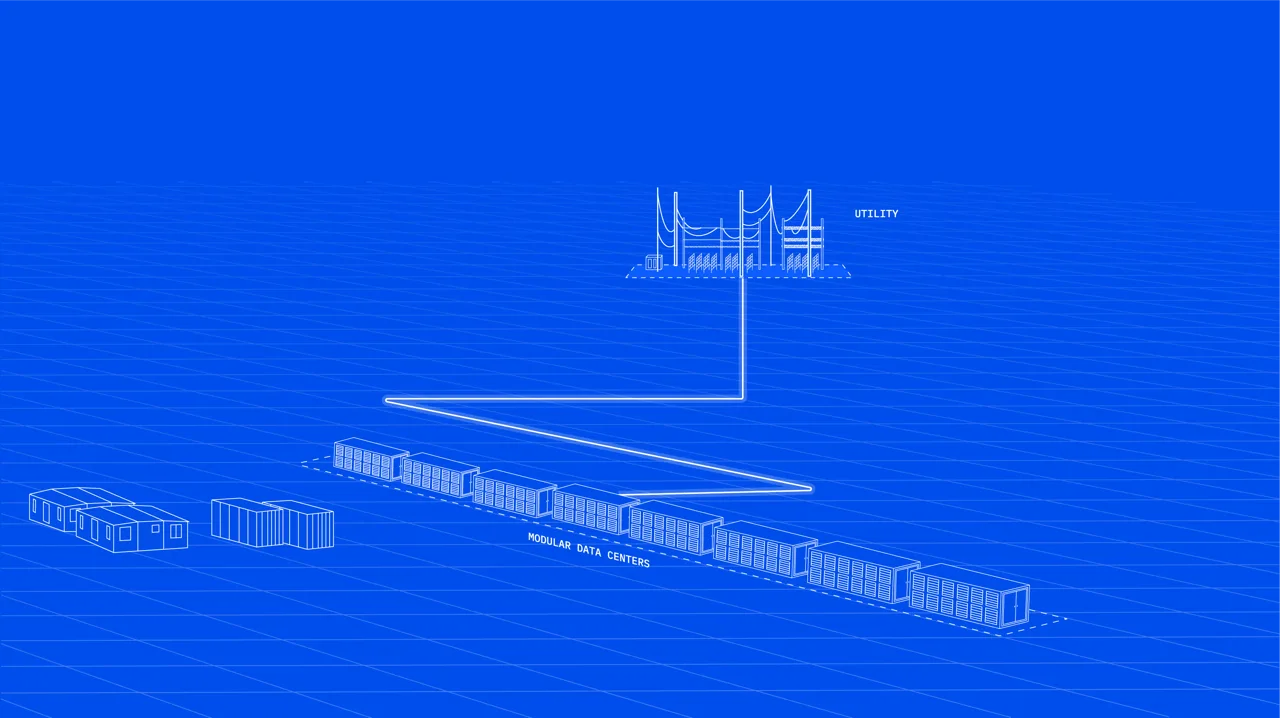
Giga Power Systems is purpose-built for flexible-load operators who need to reduce total electricity costs. We provide turnkey demand response and market participation designed around the economics of bitcoin mining and high-density compute.
Ready to optimize your operation's true costs? Get in touch with our team today to learn how hands-on market optimization reduces all-in electricity expenses and keeps you profitable when it matters most.
.avif?w=1280)