Bitcoin miners have operational challenges and pressures that most industrial customers never encounter. You’re dealing with hash price swings, tight profit margins, and strict uptime SLAs. It’s a business model built on tight math, and if you want to boost your profitability, you need to tread carefully.
Curtailment revenue is an incredible way to boost your profit margins, but traditional demand response programs weren’t designed for facilities like yours. They were built for hospitals, manufacturers, and commercial buildings with predictable, schedulable cycles. Bitcoin mining is neither predictable nor schedulable.
You need a Bitcoin mining demand response solution designed around mining business operations. The ideal solution is dynamic, responsive to market signals, and built to protect uptime without leaving curtailment revenue on the table. But how can you find a DR program designed for businesses like yours?
This post covers the ins and outs of why traditional programs fall short, then dives into the details of what Bitcoin mining demand response looks like when done right.
Understanding Bitcoin mining demand response and how it differs from traditional flexible loads
Starting with the basics, demand response is how grid operators keep the lights on when supply gets tight. Instead of firing up expensive peaker plants or risking rolling blackouts, utilities pay customers to reduce their consumption during peak hours or grid stress events.
Traditional participants, like hospitals and manufacturers, work on set schedules where they can plan for production line pauses or HVAC reductions in advance. These predictable time frames have resulted in legacy demand response frameworks that don’t account for Bitcoin mining economics.
A demand response program built for hospitals or commercial buildings won’t be able to account for hash price, breakeven thresholds, or uptime obligations. These programs force curtailment decisions that simply don’t work for Bitcoin operations. They also settle slowly, offer little transparency, and force you to leave money on the table every month.
Bitcoin mining data centers may not fit the traditional DR business model, but they’re uniquely well-suited to demand response. Miners can shut down in seconds with near-zero adjustment costs. There's no safety risk, no temperature-sensitive inventory, no patients relying on power. Unlike a hospital or factory that might curtail 10 to 20% of load, miners can offer 50%, 75%, or even 100% curtailment when economics make sense.
Bitcoin mining economics are fascinating. They don’t work like traditional loads. Instead, your revenue is determined by three variables:
- Hash rate: How much compute you're running determines your share of block rewards
- Bitcoin price: What you earn per block is volatile, unpredictable, and critical to profitability
- Network difficulty: The Bitcoin algorithm adjusts every two weeks based on the total network hash rate, determining how difficult it is to mine.
Electricity can account for up to 80% of your operating costs, so if you want to maximize profitability using demand response measures, you need to be able to follow a simple breakeven equation: miners stay on when Bitcoin price times hash rate exceeds electricity cost. They shut off when it doesn't.
Traditional demand response programs weren't built for this. They assume loads are predictable, schedulable, and consistent. Bitcoin mining is none of those things. And that's the problem.
Why traditional demand response programs fail Bitcoin miners
We’ve established that demand response is a strong strategy for any Bitcoin mining operation looking to boost its revenue and profit margins. But we also know that traditional DR programs were built for facilities with operations that are wholly dissimilar to yours.
Let’s break down the key reasons why a traditional DR aggregator is not going to be the best partner for your Bitcoin mining business.
1. Static curtailment schedules don't match Bitcoin economics.
Traditional DR programs operate on fixed schedules like, reduce load by X megawatts from 2-6 PM on hot summer days.
Bitcoin mining doesn't work that way.
Profitability changes hour by hour based on Bitcoin price and electricity costs. Miners need dynamic, site-level optimization that allows them to make granular adjustments based on real-time data, not pre-scheduled load sheds.
2. Traditional DR programs don't protect uptime SLAs or site-level breakeven math.
Many miners operate under hosting agreements with minimum uptime requirements. 95% monthly uptime is common.
Traditional demand response isn’t designed to consider these types of agreements. A generic aggregator may force curtailment when it makes no economic sense for the miner. When Bitcoin price is high and profitability is strong, the last thing you want is a DR partner telling your systems to shut off anyway.
3. Payout cycles are too slow.
Legacy DR programs settle quarterly or annually, which is way too slow for a business like yours. Miners need faster liquidity to manage cash flow in volatile markets.
Beyond that, traditional programs only offer performance reports on a quarterly basis — sometimes even less frequently. Miners need to see real-time performance, revenue attribution, and how curtailment is impacting their bottom line day-to-day. With the traditional model, you’re flying blind, waiting months for a check, with no way to verify you're being compensated fairly.
4. The telemetry and control infrastructure isn't built for high-frequency dispatch.
Traditional demand response relies on SCADA systems or manual curtailment requests. Instead, miners need secure, low-latency control with real-time metering. Your DR partner needs to work with your business model to make real-time decisions for when to curtail and when to hang onto the power you need.
The bottom line is that traditional demand response programs were built for a different era and a different set of loads. They don't understand mining economics or offer the transparency needed to protect your bottom line and your uptime SLAs.
Read more: How Simple Mining scaled to 20,000 miners with Giga Energy
What Bitcoin mining demand response looks like
Effective demand response for Bitcoin mining starts with understanding the business. That means finding operators who've built sites, managed hash rate, and felt the pressure of uptime SLAs firsthand.
Giga Energy’s mining operations run 175+ MW of flexible load sites across the U.S. with another 500 MW under development, and we use the same optimization stack for our own operations that we offer to customers. Instead of offering a generic aggregator model adapted from HVAC curtailment, we built our approach from the ground up to account for hash price sensitivity, breakeven curves, and uptime pressure.
Let’s walk through a few of the core differences you need to know when it comes to Bitcoin mining demand response.
1. Daily, site-level optimization.
Bitcoin demand response makes hour-by-hour offers rather than relying on weekly or daily blended averages. Decisions are driven by real prices, SLAs, and breakeven math rather than relying on top-down dispatch signals.
If Bitcoin price spikes and electricity is cheap, your system won’t curtail. But if Bitcoin price drops and grid prices surge, maximize curtailment revenue. That's the logic. It sounds simple, but traditional programs often don’t have the software or operational expertise required to pull it off successfully.
2. Revenue stacking across multiple market products.
Bitcoin mining demand response isn't the same as emergency curtailment. To get the most out of your enrollment, you need to participate in ancillary markets, day-ahead energy, synchronized reserves, and frequency regulation.
In Southwest Power Pool (SPP) markets, for example, stacked revenue streams can deliver up to $80,000 per MW annually. Compare that with legacy DR programs that settle quarterly and pay for only a handful of curtailment events per year.
3. Single platform that handles enrollment, telemetry, and operations.
If you don’t want to waste time and resources building your own infrastructure, you need a DR program with turnkey telemetry and secure remote control. This is especially true if you’re participating across multiple sites, where you’ll need fleet aggregation and compliance tools to keep things streamlined.
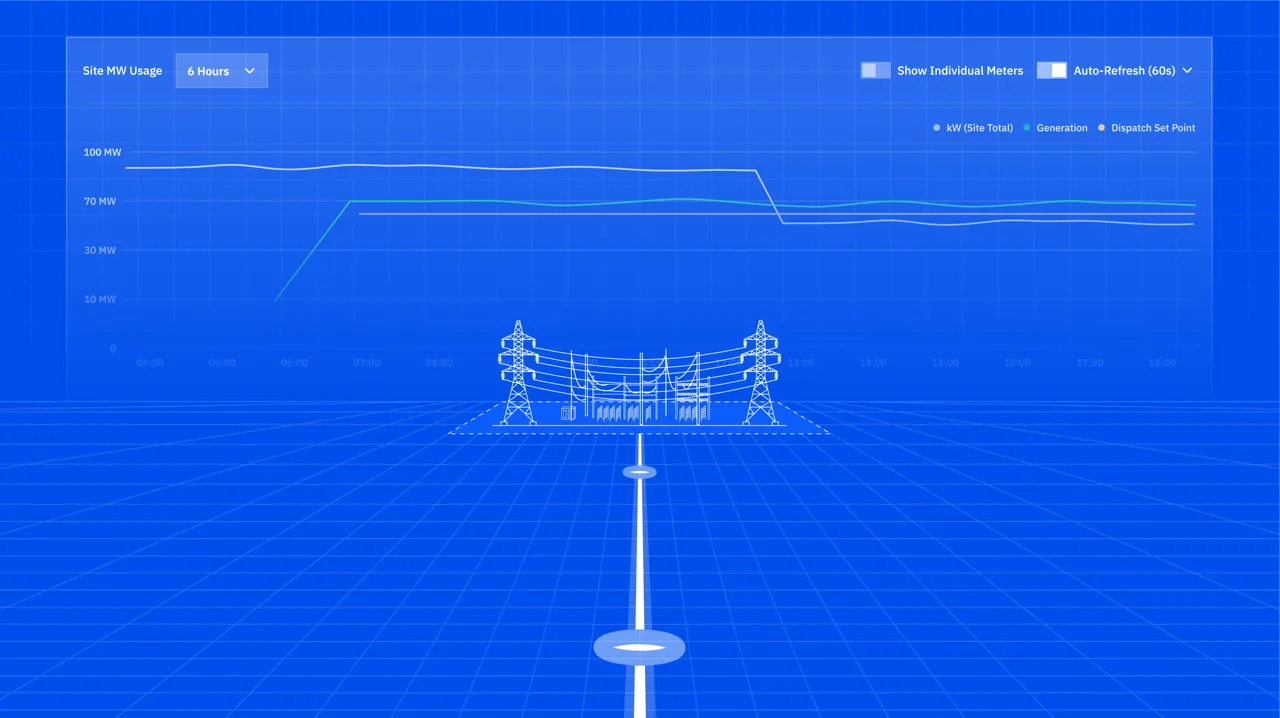
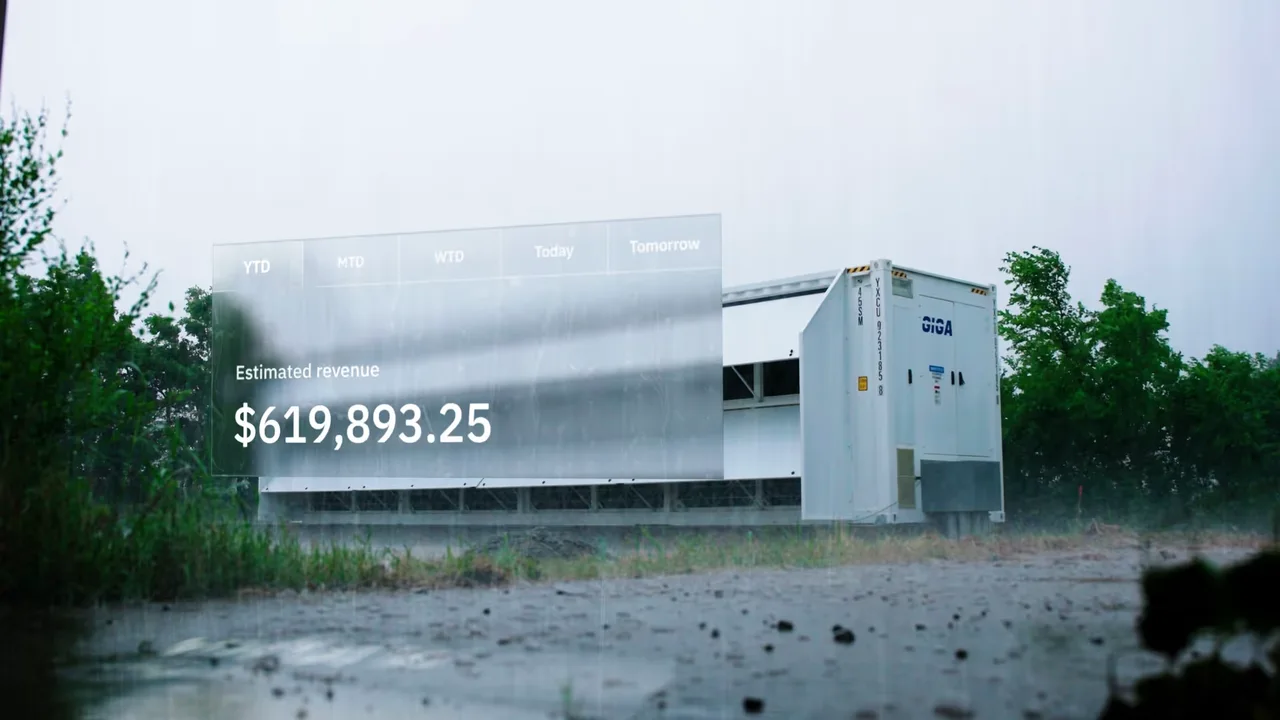
Transparent, self-serve software tooling is key for miners who want real-time visibility into curtailment events, revenue attribution, and performance against uptime SLAs. If you don’t want to wait months for a settlement report, you want a DR program with a centralized platform.
Ideally, you’ll want a provider that bundles demand response with procurement advantages. For example, customers on multi-year contracts with Giga Power Systems are eligible for procurement benefits on transformers, switchboards, and site equipment. The bundling approach lowers the total cost of ownership and consolidates vendor relationships, making it easier for you to scale sites.
Bitcoin mining demand response only works when the program is designed around mining economics, not retrofitted from legacy programs. It requires operational experience, real-time optimization, transparent tooling, and revenue models that match how miners actually make money.
The future of Bitcoin mining demand response and grid integration
Traditional demand response programs fall short for Bitcoin mining operations because they’re not built for the economics that drive your business. When you work with a traditional DR program, they may force bad curtailment decisions, settle too slowly, and leave you in the dark about performance and revenue attribution.
But the grid needs Bitcoin mining flexibility. Bitcoin mining + demand response can increase renewable energy capacity and minimize emissions impact. The International Energy Agency (IEA) recognizes demand response as critical infrastructure for managing variable renewables and growing electricity demand.
Utilities and ISOs are paying attention, and flexible compute is increasingly seen as a grid asset, not just a load. But for this push toward demand response for Bitcoin miners to work, they need sophisticated partners who understand the asset class and can deliver reliable, scalable curtailment without breaking mining economics.
Giga Power Systems was built by operators, for operators.
We combine hands-on operational experience with market-grade software designed for daily optimization. We offer transparent tooling, faster payouts, and all the support you need to get real-time visibility and faster payouts. With Giga Power Systems, you get a single partner for enrollment, telemetry, dispatch, and compliance, designed to work the way mining businesses actually operate.
Ready to turn your curtailable load into predictable revenue? Giga Power Systems makes direct market participation simple and profitable. Contact our team to learn more about demand response enrollment and market participation today.
.avif?w=1280)